
Why I Still Boot Up *7 Days to Die* When My Brain’s Fried and My To-Do List Is On Fire
Why I Still Boot Up 7 Days to Die When My Brain’s Fried and My To-Do List Is On Fire I haven’t played 7 Days to Die for three months. Then last Tuesday, at 11:47 p.m.
Why I Still Boot Up *7 Days to Die* When My Brain’s Fried and My To-Do List Is On Fire

I haven’t played 7 Days to Die for three months. Then last Tuesday, at 11:47 p.m. after a day that involved two Zoom calls, a broken dishwasher, and an argument about whether “moist” is objectively gross—I opened Steam, typed “7dtd”, hit play, and built a cinderblock bunker in the middle of a cornfield while listening to a podcast about municipal bond yields.
Yeah. It’s weirdly therapeutic.
Not because it’s polished. Not because it’s pretty. And definitely not because the story makes sense—“Navezgane County, Arizona, meaning ‘Killer of Monsters’ in Apache”—okay, sure, buddy. I’ll take that lore with the same skepticism I reserve for gas station sushi and crypto whitepapers. But here’s the thing: 7 Days to Die doesn’t try to sell you a narrative. It sells you consequence. And consequence, when done right, is hypnotic.
That First Night? Yeah, You’re Gonna Die. Probably More Than Once.
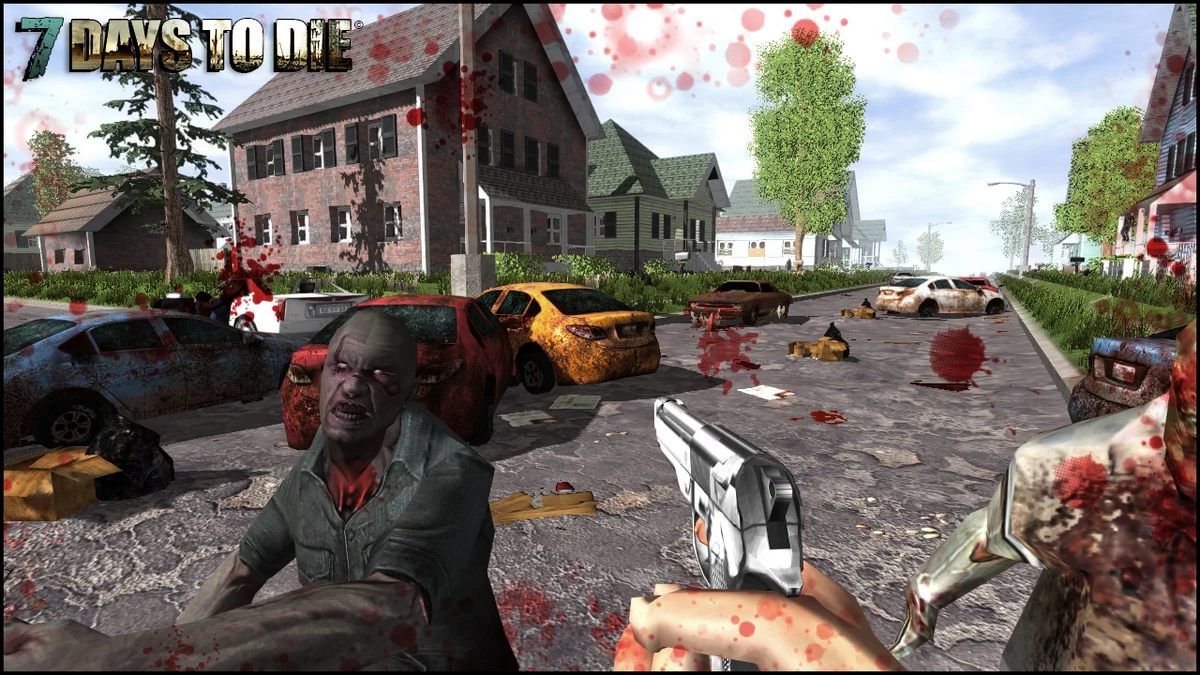
The game drops you barefoot, shirtless, and holding a rock. No tutorial pop-ups. No gentle voiceover saying, “Welcome, survivor!” Just heat haze, distant groans, and a cracked concrete road stretching into scrubland. You scramble for a rusty pipe. You swing it. You miss. A zombie lurches through a fence you didn’t realize was breakable—and suddenly you’re on the ground, bleeding out, watching your own character’s health bar blink red like a dying LED.
That first night isn’t just hard—it’s honest. Most survival games hand you a campfire and a vague sense of safety. 7 Days to Die says: “You have seven minutes before the sun sets. You have zero ammo. Your base is a hole you dug with a shovel. And yes, that guy in the flannel shirt who just climbed your roof? He’s going to kick down your door unless you’ve braced it just right.”
And here’s where it gets real: physics matter. Not as a gimmick—but as a language. If you stack wood beams over a doorway without vertical support, they sag. If you build a tower too tall with weak blocks, it buckles under its own weight—or worse, under the weight of five zombies trying to swarm it. I once watched my entire watchtower collapse because I’d used too many sandstone bricks on the upper floor and forgot to anchor it to bedrock. The crash sound effect still haunts me. It wasn’t a bug. It was the game nudging me: Hey. Pay attention.
Crafting Isn’t Just Menus—It’s Muscle Memory (and Mild Desperation)
Open your crafting menu (Tab, obviously) and you’ll see hundreds of items. But you won’t memorize them all—not at first. You’ll forget how to make nails. You’ll waste ten iron ingots trying to forge a pickaxe only to realize you needed copper for the binding. You’ll spend twenty minutes mining coal just to smelt one tin can—only to drop it into lava by accident.
That’s not bad design. That’s learning by failing, loud and messy. The recipes aren’t hidden behind quests or skill trees—they’re earned by doing. Break enough rocks, and you’ll eventually find clay. Cook enough meat over a fire pit, and you’ll unlock jerky. There’s no XP bar telling you “you’re getting better.” You just are—because suddenly, you’re building a working windmill generator without looking up the schematic, or rerouting power cables so your turrets don’t fry themselves during a horde night.
Also: the loot system actually feels random—not RNG-for-the-sake-of-it, but like rummaging through someone else’s garage sale. One day you’ll find a full set of military-grade armor in a gas station bathroom. Next time? A single AA battery and a half-eaten protein bar in a school locker. It keeps things grounded. You’re not looting tombs—you’re scavenging suburbs. And suburbs are weird.
The Horde Isn’t Just Noise—It’s a Puzzle With Teeth
Let’s talk about Night 7.
That’s when the horde hits. Not “a bunch of zombies walk toward you.” No. The game calculates pathfinding, noise propagation, structural weakness, light levels, and even how many times you’ve disturbed a particular area recently. So if you spent Day 6 blasting holes in a mall wall with C4, guess what shows up at 3 a.m.? A dozen sprinters, two screamers, and one armored brute who kicks down your reinforced steel door like it’s cardboard.
But here’s the kicker: you can fight back intelligently. Not just with guns—but with geometry. Dig trenches. Flood sections with water (zombies drown, yes, really). Build narrow chokepoints lined with spike traps that actually work. Lure screamers into corners so their shrieks don’t alert the whole county. Or, my personal favorite, set up a “distraction loop”: a looping audio lure near a cliff edge, so hordes fall off, respawn, fall off again, rinse, repeat.
It’s absurd. It’s deeply satisfying. And it rewards patience more than reflexes.
Servers Are Where the Game Actually Lives
Solo? Fine. But 7 Days to Die breathes on multiplayer servers—especially private ones run by actual humans who care. I’m on one with six people, including a retired civil engineer who redesigned our entire power grid using real-world voltage math, and a high school art teacher who built a functioning water-powered elevator out of scrap metal and pulleys.
No one’s yelling “GG” or typing “ez.” We argue about whether cobblestone stairs are structurally sound (they’re not), vote on whether to expand east or south, and collectively panic every time someone spots a “Blood Moon” warning on the horizon. That shared dread, and shared triumph, is baked into the code. The game doesn’t just let you co-op. It forces collaboration, gently but firmly. You need someone to guard the perimeter while another digs the basement. Someone to craft meds while another repairs turrets. Someone to remember where the damn fuse box is.
Which, honestly? Feels rare these days.
So… Who’s This For?
Not for people who want cinematic storytelling. Not for folks who crave tight controls or AAA visuals. And definitely not for anyone allergic to jank—yes, sometimes your character clips through walls. Yes, sometimes a horde spawns inside your base because you left a tiny gap in the foundation. Yes, the UI still looks like it was designed in 2012 (it kinda was).
But if you like making things work, even when they shouldn’t—if you get weirdly proud of a well-placed pressure plate, or if you’ve ever spent an hour reorganizing your storage room just to reduce walking distance by twelve seconds—then 7 Days to Die is still quietly, stubbornly, gloriously alive.
It’s not perfect. It’s not flashy. But it’s got soul—a kind of stubborn, dusty, duct-taped-together soul that refuses to be smoothed over. And sometimes, that’s exactly what you need: not escape, but engagement. Not fantasy—but the quiet, sweaty satisfaction of knowing that, for a few hours, you built something real. Even if it’s just a cinderblock bunker in the middle of a cornfield. Even if it falls down tomorrow.
Hell, especially then.
References & Further Reading
Loading comments...
Loading similar articles...