
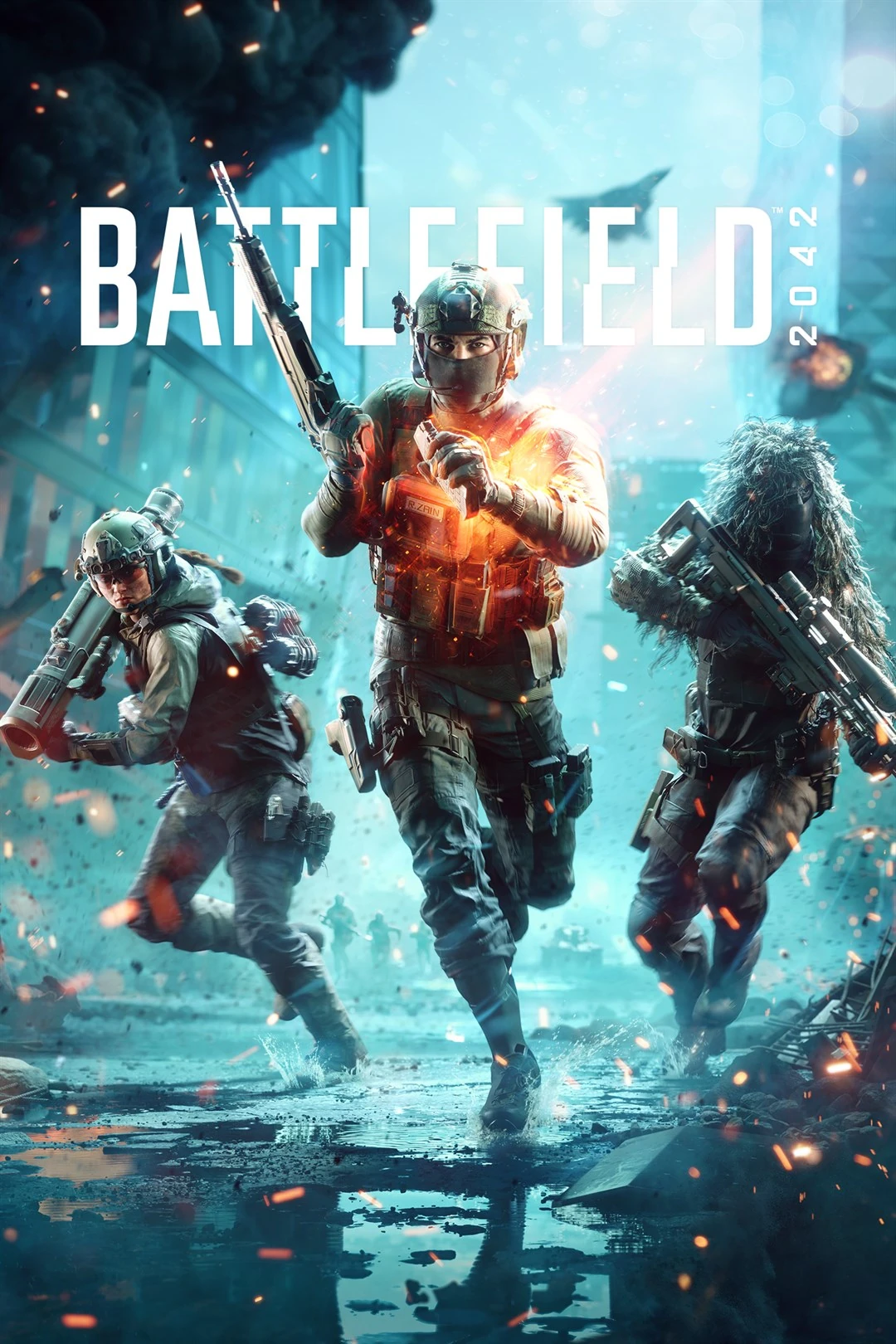
Battlefield 2042 Isn’t Broken — It’s Just Tired of Pretending
Battlefield 2042 Isn’t Broken — It’s Just Tired of Pretending I played Battlefield 2042 for 93 hours before I stopped caring whether my squad had flank cover or if the M4 was still meta.
Battlefield 2042 Isn’t Broken — It’s Just Tired of Pretending

I played Battlefield 2042 for 93 hours before I stopped caring whether my squad had flank cover or if the M4 was still meta. Not because I got bored, though, yeah, sometimes I did, but because something clicked: this isn’t a failed reboot. It’s a midlife crisis in FPS clothing. A game that spent its launch trying to be everything at once — and ended up feeling like nothing at all.
And yet? I’m still logging in. Twice a week. Mostly for the weather.
The Storms Are Real (and Weirdly Good)
Let’s get this out of the way first: the dynamic weather system isn’t just a gimmick. It’s the only part of 2042 that feels alive. Not “cinematic alive,” not “set-piece alive” — just… unpredictable. One minute you’re pushing Conquest on Orbital, crouched behind a half-destroyed satellite array; the next, a sandstorm rolls in so thick your minimap blurs, your HUD flickers, and your comms crackle with static like you’re talking through a faulty radio from 1973. You can’t ping enemies through it. Your UAV goes blind. Even the AI bots pause, confused, before wandering into the haze like sleepwalkers.
That’s not polish. That’s physics meeting chaos — and it works. DICE didn’t just slap “weather” on top of maps. They baked it into movement, visibility, sound propagation, even vehicle handling. Try flying a jet in a thunderstorm over Suez — your controls jitter, your altimeter drifts, lightning flashes so bright you lose depth perception for half a second. It’s disorienting. It’s unfair. And it’s the most Battlefield thing about the whole damn game.
Specialists: Personality Without Personality
Remember when classes meant something? When being Assault meant you carried medkits and rockets, and you knew exactly what your teammate was bringing before they spawned? 2042 scrapped that for “Specialists” — 16 characters with names, backstories, and one unique gadget each (Maria’s syrette pistol, Casper’s motion sensor, Kimble’s grappling hook). But here’s the thing nobody talks about: almost all of them play identically.
You pick Maria not because she’s a field medic who survived a refugee camp siege — but because her syrette lets you heal while moving. Which is objectively better than Kareem’s drone that takes three seconds to deploy. So everyone picks Maria. Or Boris. Or whoever’s gadget happens to counter the current meta loadout. The “character” part gets stripped away fast. You don’t roleplay a specialist — you optimize one.
The passive traits are mostly forgettable. Casper’s sensor? Cool until you realize it only shows enemies within 15 meters — and half the time, you’re already dead before it pings. Kimble’s grapple? Fun for 20 minutes. Then you realize it eats ammo, slows your sprint, and makes you a target the second you fire it. It’s not bad design — it’s over-designed. Like someone took a whiteboard, wrote “Make It Unique!” in Sharpie, and forgot to ask why.
Maps That Want to Be Movies (But Can’t Afford the Script)
The scale is staggering — 128 players across landscapes that stretch farther than your screen can render. On PC, it’s legitimately breathtaking: snowfields in Antarctica, cargo yards in Singapore, the cracked concrete sprawl of an abandoned spaceport in Kazakhstan. But scale doesn’t equal substance. Too many maps feel like empty stages waiting for a director who never showed up.
Orbital’s great — vertical, layered, full of tight corridors and open sightlines. But Port Alexandria? A flat, beige desert grid dotted with identical shipping containers. You could drop a pin anywhere and it’d look like every other pin. And don’t get me started on Kaleidescope — a neon-drenched “cyberpunk” map that looks like it was designed by someone who’d only seen Blade Runner screenshots on Pinterest. There’s no logic to the layout. No flow. Just blinking signs and forced “cool.”
What’s missing isn’t realism — it’s intention. Old Battlefield maps felt built around chokepoints, flanking routes, and natural cover because they were tested, tweaked, and lived in for years. These feel like prototypes — ambitious, technically impressive, but emotionally hollow.
Bots? Yeah, They’re Here — And They’re Kinda Sad
EA marketed the AI bot mode as “solo play.” What it really is: a lonely simulation of teamwork where your teammates don’t talk, don’t adapt, and will absolutely, without irony, stand in the middle of a road while getting vaporized by a tank round — then respawn and do it again.
They’re fine for learning weapon recoil or practicing vehicle spawns. But calling them “AI” feels generous. They follow waypoints like sleepwalkers. They won’t suppress fire unless scripted. They’ll rush a bunker alone while you watch, helpless, from cover — not because they’re brave, but because their pathfinding gave up halfway.
Still, I appreciate the effort. It’s the only part of 2042 that quietly admits, “Yeah, we know you might want to play alone sometimes.” It’s not great. But it’s there. And after years of “always-online-only” games treating single-player as a shameful secret, that counts for something.
The Long Haul Is… Fine?
Seasons came and went. Weapons got rebalanced. Maps rotated in and out. The Battle Pass delivered mostly cosmetic clutter — camos that look like expired yogurt, emotes that make your character moonwalk while holding a toaster. Nothing revolutionary. Nothing terrible.
What 2042 became, slowly, was a low-stakes hangout. Not the adrenaline rush of BF3’s Tehran or the tactical weight of BF4’s Operation Locker — but something quieter. A place where you log in, grab your favorite gun (mine’s still the FAMAS — yes, really), find a decent squad, and just move. Push objectives. Drive trucks. Get shot at. Laugh when your teammate clips through a wall and falls into the void.
It’s not the Battlefield we hoped for in 2021. But it’s the Battlefield we got — messy, inconsistent, occasionally brilliant, often baffling, and stubbornly persistent.
So who’s it for? Not fans waiting for a return to form. Not people who need narrative payoff or deep progression. But if you like big maps, real weather, vehicles that don’t instantly explode, and the quiet satisfaction of coordinating a flank with three strangers who almost remember your callouts — yeah. It’s for you. Just don’t expect fireworks. Expect fog. Expect dust. Expect the slow, weird, unglamorous work of rebuilding something — even if you’re not quite sure what it’s supposed to become.
References & Further Reading
Loading comments...
Loading similar articles...