
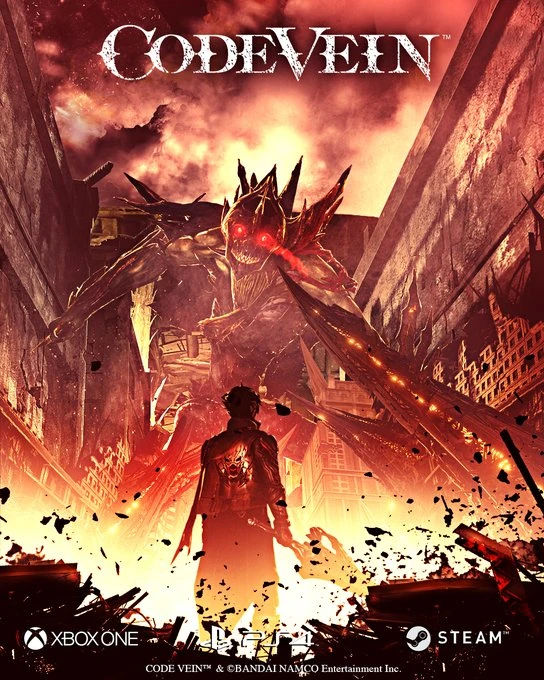
Code Vein Isn’t a Souls Clone — It’s a Blood-Slicked, Over-Engineered Dating Sim With Swords
Code Vein Isn’t a Souls Clone — It’s a Blood-Slicked, Over-Engineered Dating Sim With Swords I died 47 times in the first boss fight. Not because I was bad. Not because I hadn’t read the tutorial.
Code Vein Isn’t a Souls Clone — It’s a Blood-Slicked, Over-Engineered Dating Sim With Swords

I died 47 times in the first boss fight. Not because I was bad. Not because I hadn’t read the tutorial. Because Code Vein handed me a sword, told me to “drain” enemies like a polite vampire at a wine tasting, and then dropped me into a hallway full of armored, screaming revenants who all knew how to parry and combo and stagger and counter-drain me if I held my breath for half a second too long. And yeah — I laughed. Out loud. In my quiet apartment. Because it felt less like a punishing action RPG and more like getting gently scolded by a very stylish, very tired older sibling who’s seen this movie before.
It’s got stamina bars *and* ichor bars *and* focus bars *and* memory loss
Let’s get this out of the way: Code Vein is mechanically dense. Like, “three separate resource systems feeding into each other while your partner yells ‘Watch your back!’ as you’re simultaneously trying to remember your own name” dense. You’ve got stamina — standard stuff, used for attacks, dodges, dashes. Then there’s ichor — your blood meter, which fuels drains, special drains, and passive gifts. And then there’s focus — a risk/reward gauge that fills when you dodge just right or tank a hit, letting you briefly go full anime mode: stun-lock enemies, launch them skyward, or even cancel incoming attacks mid-swing.
None of these exist in isolation. Drain an enemy? You gain ichor and increase your max ichor stock — but only if you do it cleanly. Mess up the timing? You get a tiny trickle and a nasty stagger animation. Land a Special Drain (parry → drain, or backstab → drain, or 5-hit combo → drain)? You get massive damage plus a chunk of ichor plus a temporary stat boost plus your partner cheering like they just won bingo. It’s absurd. It’s overkill. And somehow, it works — because it rewards attention, not just reflexes.
Your partner isn’t just backup — they’re your emotional support NPC with a grudge
You don’t play Code Vein alone. Even solo, you’ve got a partner AI tagging along, calling out openings, reviving you when you die (yes, really), and occasionally whispering something weirdly vulnerable like “I remember… something warm. Before the Thorns.” They’re not just meat shields or heal bots. Their dialogue changes based on your gift loadout, your choices in dialogue trees (which actually matter — skip a conversation and they might withhold a key skill later), and how often you let them take point in combat.
Mine was Micol — stoic, sharp-tongued, and perpetually annoyed I kept forgetting her name. She’d interrupt my frantic button-mashing with dry commentary: “You’re exhausting yourself. Breathe. Or don’t — I’m not your mother.” And then, five minutes later, she’d sacrifice her last HP to shield me from a boss’s ground slam. It’s cheesy. It’s melodramatic. But it’s also sincere, in that specific Japanese-RPG way where trauma is expressed through clipped sentences and shared meals in dimly lit safe rooms. These aren’t NPCs — they’re roommates in a crumbling apocalypse, and you feel the weight of keeping them alive.
Gifts aren’t spells — they’re personality traits made manifest
Forget fireballs and ice shards. Gifts in Code Vein are weird, personal, and deeply tied to identity. “Blood Edge” doesn’t just add fire damage — it makes your sword trail crimson smoke and leaves burn marks on walls you can see. “Hemophagy” lets you heal by draining while blocking — but it slowly erodes your sanity meter, nudging you closer to becoming a Lost. “Sanguine Shield” creates a shimmering barrier — but only if you’ve equipped a heavy weapon and you’re below 30% HP. It’s not “what can I cast?” — it’s “who am I right now, and what does that cost?”
I spent hours rejigging my gift loadout not for optimal DPS, but because I liked how “Ravenous Maw” made my character lunge forward like a startled heron, or how “Crimson Vow” gave my dodge a split-second invincibility frame and a soft chime — like a vow being reaffirmed. This isn’t buildcrafting. It’s roleplay scaffolding. You’re not min-maxing stats — you’re curating a mood.
The world isn’t grimdark — it’s quietly, devastatingly *boring*
Most post-apocalyptic games go full Mad Max: rust, fire, screaming. Code Vein goes full abandoned office park at 3 a.m. Skyscrapers aren’t collapsed — they’re preserved, eerily intact, their windows cracked but still reflecting grey sky. Hallways are lined with water-stained carpet, flickering fluorescents, and vending machines holding dusty protein bars. You find notes about quarterly reports, lost keys, a birthday cake left on a desk. The horror isn’t gore — it’s the sheer, suffocating banality of collapse. You’re not fighting monsters in a wasteland. You’re walking through the ruins of corporate normalcy, and the scariest thing is how familiar it feels.
And the Lost? They’re not snarling beasts. Some shuffle. Some kneel. Some just stand, staring blankly at a wall, mouths moving silently. One boss, the “Hollowed Executive”, wears a tattered suit and fights with a broken briefcase. He doesn’t roar. He apologizes, mid-combo. It lands harder than any dragon scream.
So… who’s it for?
Not Souls veterans looking for another punishing pilgrimage. Not casual players who want breezy combat and clear objectives. Code Vein is for people who miss the tactile joy of Devil May Cry’s style meter, the quiet melancholy of Shadow of the Colossus, and the low-key romance of Persona’s party banter — all crammed into one blood-soaked, slightly awkward package.
It’s flawed. The camera fights you in tight corridors. Some bosses feel like RNG roulette. The story stumbles hard in Act 3, swapping emotional nuance for exposition dumps. And yes — the blood-draining mechanic gets old if you’re not invested in the characters behind it.
But here’s what stuck with me: I stopped playing to “win.” I played to check in on Micol. To see if she’d finally tell me about the locket she keeps touching. To test whether “Sanguine Shield” could actually save me from the elevator boss this time. To stand in an empty lobby, listen to rain hit broken glass, and wonder what coffee tasted like before the Thorns.
It’s not perfect. It’s not deep in the way Elden Ring is deep. But it’s warm, in its own messed-up, anemic, blood-starved way. And sometimes — especially after a year of watching the real world fray at the edges — that warmth matters more than flawless mechanics.
So yeah. Die 47 times. Let your partner drag you back. Forget your own name. And then, quietly, deliberately, drain the next enemy — not for power, but because it’s the only way you know how to say “I’m still here.”
References & Further Reading
Loading comments...
Loading similar articles...