
Cuphead Isn’t a Test of Patience — It’s a Test of Whether You Still Believe in Fun
Cuphead Isn’t a Test of Patience — It’s a Test of Whether You Still Believe in Fun I died 47 times to a sentient teapot named Chef Saltbaker before I finally beat him.
Cuphead Isn’t a Test of Patience — It’s a Test of Whether You Still Believe in Fun

I died 47 times to a sentient teapot named Chef Saltbaker before I finally beat him. Not counting retries where I rage-quit, slammed my controller on the couch, and muttered something unprintable about “1930s jazz” and “my life choices.” Yet, somehow, I laughed. Out loud. At myself. At the absurdity of a cartoon kettle flinging boiling gravy like it’s personal.
That’s the thing no one tells you about Cuphead: it doesn’t want you to suffer. It wants you to lean in. To grin while your character explodes into confetti for the tenth time in thirty seconds. To watch a boss morph from a cigar-chomping octopus into a giant rotating slot machine mid-fight and think, Oh. Oh wow. Okay. Let’s try that again.
The Art Isn’t Just Pretty — It’s a Trap (and a Promise)
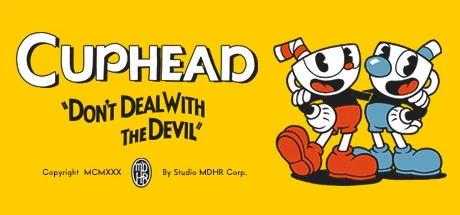
Yeah, the hand-drawn, rubber-hose animation is stunning. But calling it “a visual homage” feels like calling a tornado “a weather event.” This isn’t decoration — it’s active misdirection. Those wobbly limbs? They sell every dodge, every feint, every sudden lurch sideways. That jittery walk cycle? It makes Mugman feel alive, not just animated. And the backgrounds, all ink-washed clouds and vibrating halftone skies, don’t just sit there. They pulse. They breathe. They make the whole world feel like it’s holding its breath before the next punchline… or the next bullet hell sequence.
StudioMDHR didn’t just copy Fleischer cartoons. They weaponized their grammar. That surreal, slightly unhinged energy? It’s baked into how bosses behave. A saxophone player doesn’t just shoot notes — he unspools himself into a spiraling ribbon of brass and teeth. A vampire bat doesn’t swoop — she folds into a paper airplane, then dives like a guillotine blade. You’re not just learning patterns. You’re learning personality. And if you miss that, you’ll keep dying — but not because the game’s unfair. Because you weren’t watching closely enough.
“Run and Gun” Is a Lie (and That’s Fine)
Let’s be real: this isn’t Contra. There’s no running through levels. There’s no scrolling platforming where you jump over pits while shooting goons. Almost the entire game is built around two things: boss fights, and short, tightly wound “run” sections that are really just boss preludes with extra steps.
The “run” parts — like dodging falling pianos in the casino or weaving through a collapsing amusement park — exist to break up the rhythm. To make you sweat before the real fight even starts. They’re short, sharp, and deliberately disorienting. You’re not supposed to master them like a speedrun segment. You’re supposed to feel the panic rise, then exhale when you hit the boss door. It’s pacing as psychological prep work. And it works.
Your Fingers Will Betray You (But Your Brain Might Save You)
Here’s what no review ever admits: Cuphead’s difficulty isn’t about twitch reflexes alone. It’s about reading. Watching. Pausing, mentally, between waves. See, most bosses telegraph moves hard. Chef Saltbaker doesn’t just throw gravy — he leans back, widens his eyes, and inhales like he’s about to sneeze out a tidal wave. The Root Pack doesn’t just charge — he stomps three times, each stomp cracking the ground wider, giving you exactly two frames to jump away from the fissure, not just over it.
The game rewards observation more than reaction. Which means: if you’re losing, it’s rarely because your hands failed you. It’s because your eyes skipped a frame. Or you assumed the pattern was repeating — when really, the boss just added a new phase. And yes, the parry system (jumping into pink projectiles to gain super meter) feels like magic when it clicks… and like divine punishment when you mistime it by half a frame. But it’s never arbitrary. It’s always there, waiting for you to notice.
King Dice Is the Real Villain (And He’s Also Kind of a Dork)
Let’s talk about King Dice — the smarmy, bowler-hatted casino manager who blocks your path to the Devil. He’s not just a gatekeeper. He’s the game’s secret thesis statement. His entire fight is built on betting mechanics: he rolls dice to determine which attack he’ll use next, and sometimes lets you see the roll before he commits. You can’t stop the dice — but you can learn what each combo means. Red + blue? Expect firecrackers and ricocheting coins. Green + yellow? Get ready for a full-screen pinball bounce.
He’s also the first boss who talks back. Not in cutscenes — mid-fight. “You think you’re hot stuff?” he’ll sneer after you dodge his triple-tap. “Try this!” It breaks the fourth wall without breaking immersion — because in Cuphead’s world, arrogance is part of the physics engine.
And yeah, he’s annoying. He’s meant to be. He’s the embodiment of that one guy at the poker table who wins too much and won’t shut up about his “system.” Beating him doesn’t feel like triumph — it feels like finally getting the mic back.
So Who’s This For? (Spoiler: Not “Everyone”)
Look — Cuphead isn’t for people who want to “experience a story.” The plot is thin, charming, and basically serves as connective tissue between boss fights. It’s not for people who need constant progression unlocks or loot drops. You get three weapons. You get three charms. You upgrade them by grinding, yes, grinding, but only so you can survive longer, not so you can skip ahead.
It’s for people who still get weirdly excited when a boss changes forms. Who find joy in memorizing the exact moment a jellyfish boss blinks before launching her electric tentacle barrage. Who laugh when Cuphead does his little victory dance, arms flailing, legs kicking, after a win, like he just remembered he’s supposed to celebrate.
It’s for people who remember what it felt like to beat Mega Man 2 on a CRT TV with no save points and no internet walkthroughs — just stubbornness, rewinding the VHS tape of your older brother’s playthrough, and the quiet, stupid pride of doing it yourself.
I don’t think Cuphead is “hardcore.” I think it’s honest. It doesn’t hide behind lore dumps or skill trees. It says, flat out: “Here’s a cartoon. Here’s a rulebook written in slapstick. Learn it. Laugh when you fail. Try again. And maybe, just maybe, you’ll start seeing the jokes in the chaos.”
I still haven’t beaten the final Devil fight on Expert Mode.
But I keep loading it up.
Not to win.
Just to hear that trumpet hit one more time.
References & Further Reading
Loading comments...
Loading similar articles...