
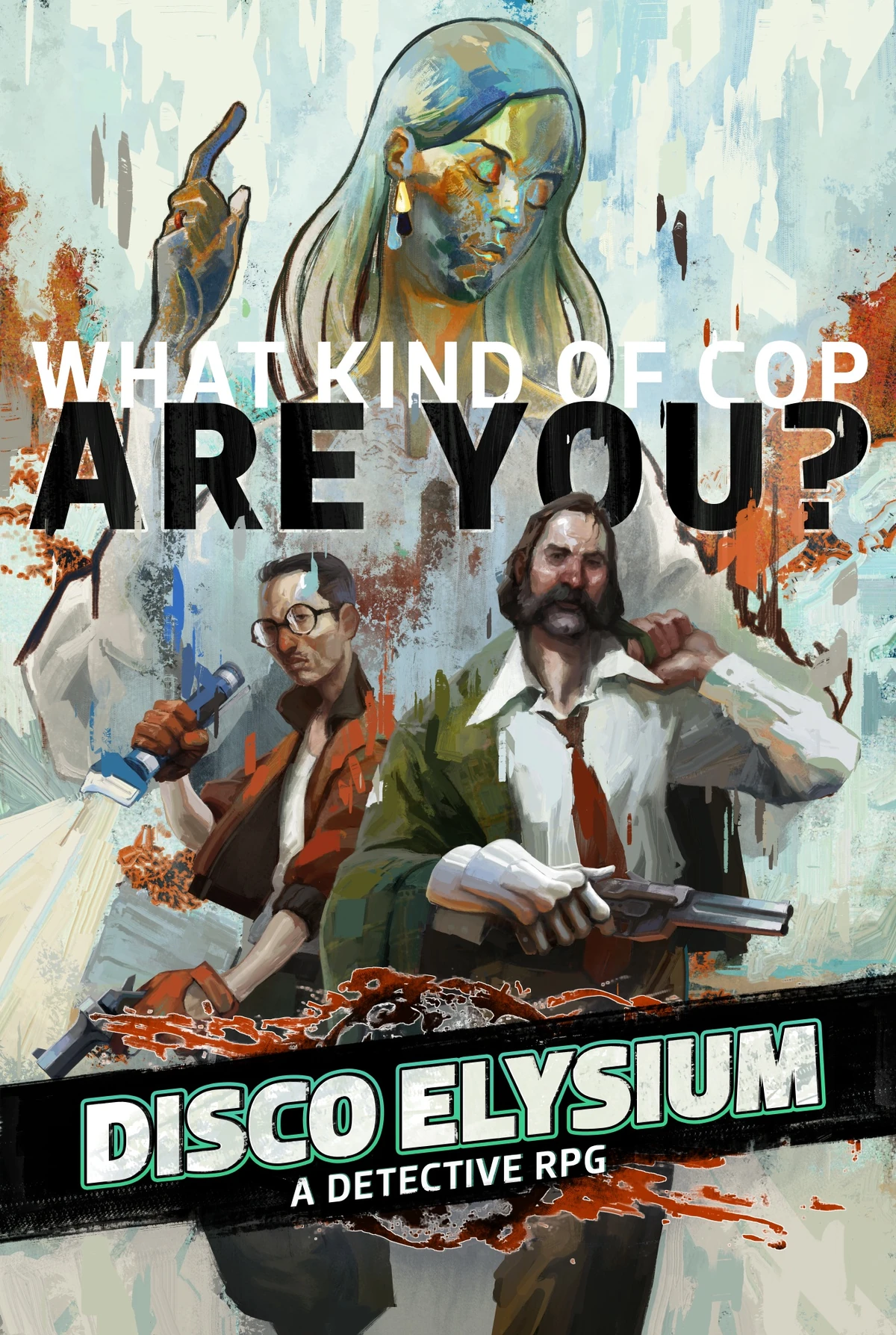
The Cop Who Forgot His Own Name — And Why That’s the Best Thing That Ever Happened to RPGs
The Cop Who Forgot His Own Name — And Why That’s the Best Thing That Ever Happened to RPGs I played Disco Elysium for three hours straight, then sat on my couch staring at the ceiling, blinking slowl
The Cop Who Forgot His Own Name — And Why That’s the Best Thing That Ever Happened to RPGs

I played Disco Elysium for three hours straight, then sat on my couch staring at the ceiling, blinking slowly, thinking: Wait — did I just talk to a vending machine? Did I convince a pigeon to testify? Did I, in fact, lose my badge, my gun, and most of my dignity… and still feel like I’d won?
Yeah. That’s the game.
It’s not about solving a murder. Not really. It’s about watching a man try to reassemble himself from cigarette ash, bad decisions, and half-remembered philosophy lectures — all while wearing socks mismatched so violently they qualify as performance art.
You Don’t Play a Character. You Play a Hangover.
Harrier Du Bois wakes up face-down in a rain-stained room that smells like regret and cheap wine. He doesn’t know his name. Doesn’t remember how he got there. Doesn’t know if he’s supposed to be a cop, a spy, or just some guy who once tried to unionize pigeons.
The game doesn’t hand you a character sheet and say “pick your stats.” It forces you into one — a walking, sweating, trembling mess of neurochemistry and trauma. Your Skills aren’t abstract numbers. They’re voices in your head. Literally. Twenty-four of them. Each with opinions, agendas, and zero respect for boundaries.
Logic will calmly explain why jumping off a roof is statistically unsound. Electrochemistry will whisper, “You’ve done worse. Try it.” Drama will beg you to monologue at a dumpster. Empathy might start crying for a rusted-out mailbox.
And here’s the thing no review ever mentions: you will listen to them. Not because you have to — but because they’re weirdly persuasive. Because sometimes, when Logic is yelling about evidence and Volition is screaming “JUST PUNCH HIM,” you realize… you don’t actually know which voice is right. Or even yours.
That’s the genius. It’s not role-playing as someone. It’s role-playing against yourself.
The World Doesn’t Care About Your Backstory — But It *Does* Care About Your Socks
Revachol isn’t a fantasy city full of dragons or elves. It’s a place where Soviet brutalism bleeds into 70s disco posters, where a rusted-out tram line runs past a mural of Marx holding a flaming bass guitar, where the local gang wears leather jackets and kneels before a statue of “The Innocent,” a semi-official deity of historical inevitability.
This isn’t “modern fantasy” dressed up in cool clothes. It’s something stranger: a world that believes in ideology the way other worlds believe in magic. Communism isn’t a political stance here — it’s a weather system. Fascism isn’t a party platform — it’s a fungal growth under floorboards. And the Pale? That misty void between landmasses? Yeah, it’s literally anti-reality. Stare into it too long and your grammar starts fraying.
But you don’t learn any of that from lore dumps. You learn it by trying to buy coffee and getting lectured on dialectical materialism by the barista — who also happens to be your ex-girlfriend’s cousin’s landlord’s parrot.
The setting isn’t described. It’s interrogated. And you’re the one doing the interrogating — badly, often drunk, usually half-naked.
Combat Is Optional. Consequences Are Not.
There are no turn-based battles. No health bars. No loot drops.
There is, however, a moment where you attempt to seduce a security guard by reciting lines from Les Misérables in broken French while wearing only one shoe and a tie-dye scarf you found in a dumpster.
There’s another where you try to intimidate a gang leader by quoting Hegel — and fail so spectacularly that he offers you tea and asks if you’ve considered therapy.
Combat exists, sure — but it’s verbal, psychological, emotional. You “roll” skills like Authority or Inland Empire (yes, that’s a real skill) to bluff, charm, terrify, or confuse. Fail a roll? Your character doesn’t just miss — they devolve. They stammer. They vomit. They confess to crimes they didn’t commit. They start believing their own lies.
And unlike most RPGs, failure here isn’t a dead end. It’s a branch. A failed persuasion might lead to a new ally. A botched investigation could unlock a whole subplot about municipal plumbing reform. There’s no “game over.” Just increasingly surreal ways to keep digging.
Your Inventory Has Feelings Now
You collect clues — sure. A bloodstain. A torn flyer. A suspiciously warm thermos. But Disco Elysium also lets you collect thoughts. Yes. Actual thoughts. You can “internalize” ideas — like “Capitalism is a parasite” or “I am not worthy of love” — and slot them into your brain like apps.
Some thoughts help you interpret the world. Others warp it. One thought makes every NPC speak in iambic pentameter. Another makes you see ghostly versions of your past selves judging your life choices. (Spoiler: they’re harsh.)
This isn’t just flavor text. It changes dialogue trees. It unlocks new investigations. It turns your own psyche into both weapon and wound.
And honestly? It’s exhausting. In the best possible way. By hour six, I was second-guessing whether my own memory was reliable. Which, yeah — maybe that’s the point.
Voice Acting Didn’t Save the Game. It *Broke* It — In the Best Way
The Final Cut added full voice acting — and it’s wild. Not because it’s polished (though much of it is), but because it’s unhinged. The voices don’t just deliver lines — they live in them. Kim Kitsuragi sounds tired, kind, quietly furious at the universe. The communist bartender doesn’t just argue politics — she exhales Marxist theory like smoke. And Harrier? His voice cracks, slurs, pauses mid-sentence like he’s remembering something painful — or forgetting something vital.
But here’s the kicker: even with all that voice work, the text still matters more. The writing is dense, lyrical, absurd, devastating — and it requires you to slow down. To reread. To sit with a sentence like “The sky is a cracked mirror held aloft by dying gods.” You don’t skim Disco Elysium. You chew it. You get crumbs stuck in your teeth.
So Who’s This For?
Not people who want clear goals. Not people who need power fantasies. Not people who think “fun” means killing things efficiently.
It’s for anyone who’s ever stared at a blank notebook and wondered if the problem is the page — or the person holding the pen.
It’s for fans of Blade Runner, The Wire, and Waiting for Godot — all mashed together in a polyester shirt two sizes too small.
It’s not perfect. Some side quests fizzle. The UI’s clunky. You will accidentally insult a grieving widow because you misread a skill check. And yes — the pacing lurches like a man trying to walk home after three bottles of cheap vodka.
But it’s also the only RPG I’ve ever played where I cried over a conversation with a dog. Where I debated existentialism with a lamppost. Where I spent twenty minutes trying to figure out if my character’s depression was a flaw — or the only honest thing about him.
Disco Elysium doesn’t ask you to save the world.
It asks you to decide whether you even want to remember your own name.
And somehow? That’s enough.
References & Further Reading
Loading comments...
Loading similar articles...