
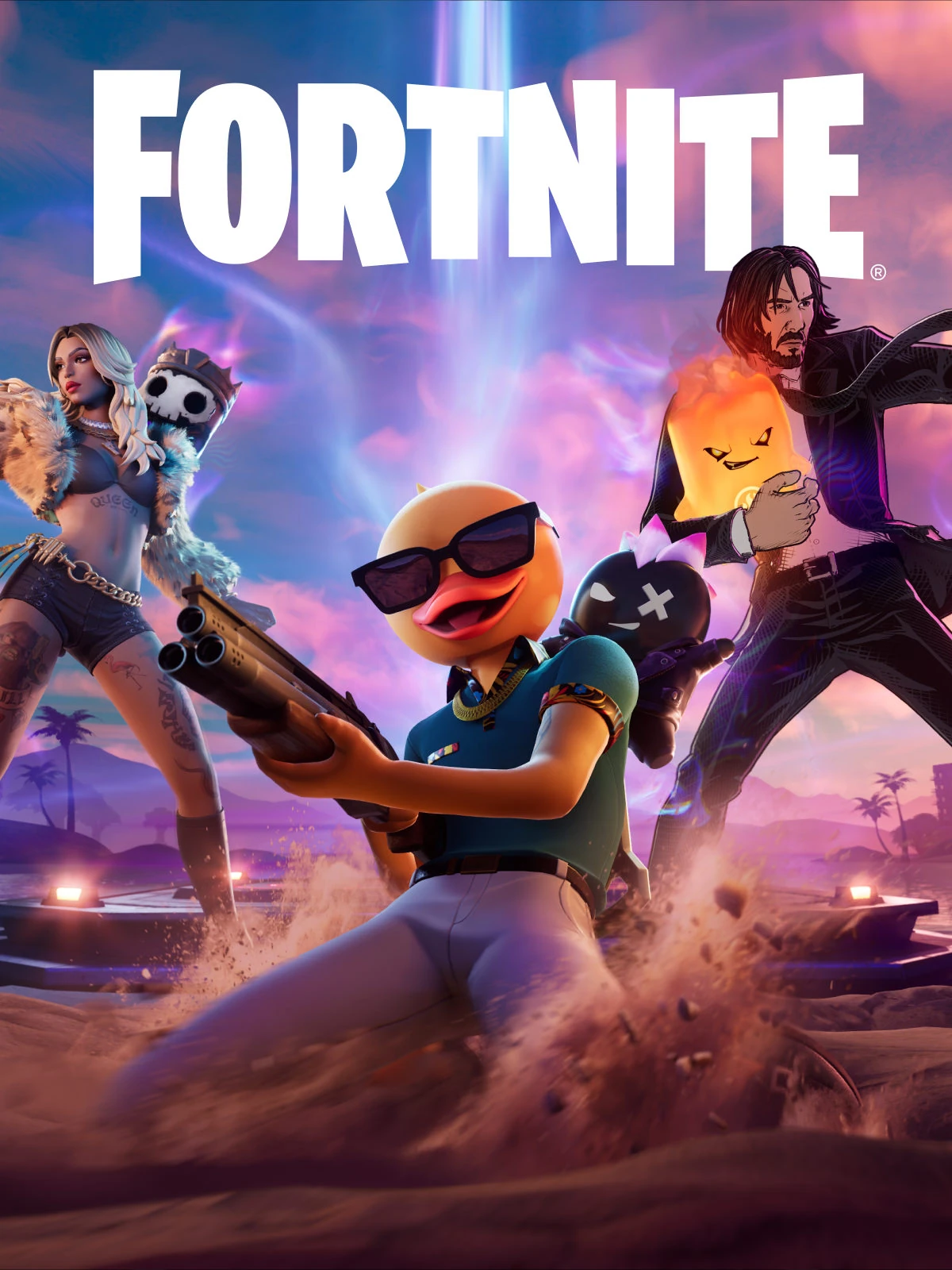
Fortnite Isn’t a Game Anymore — It’s the Default Setting for Being Online
Fortnite Isn’t a Game Anymore — It’s the Default Setting for Being Online I was at a friend’s birthday BBQ last summer when her 10-year-old nephew sprinted past me holding an iPad like it was a live
Fortnite Isn’t a Game Anymore — It’s the Default Setting for Being Online

I was at a friend’s birthday BBQ last summer when her 10-year-old nephew sprinted past me holding an iPad like it was a live grenade. “Dude just dropped into Tilted Towers and got a Mythic shotgun and built a ramp and headshot the guy who spawned on him before he even hit the ground,” he yelled, breathless, not even looking up. His mom sighed and handed me a lukewarm beer. “He hasn’t asked for a snack in 47 minutes. That’s our metric now.”
That’s the thing no press release ever tells you: Fortnite stopped being about winning matches years ago. It’s about staying synced — with your cousin in Ohio, your ex’s new partner (who you definitely didn’t stalk but did see in a squad), that TikTok dancer who somehow knows your exact loadout, and yes, occasionally, the actual game.
How a Zombie Survival Side Project Accidentally Invented the Internet’s Town Square
Let’s get this straight: Fortnite launched as Save the World. A co-op PvE thing with husks, heroes, loot trees, and crafting that felt suspiciously like Minecraft crossed with XCOM — if XCOM had glittery emotes and a soundtrack by The Weeknd. It was fun, clunky, earnest. And nobody played it.
Then, in September 2017, Epic quietly dropped Battle Royale as a free mode. No fanfare. Just a patch note buried somewhere near “fixed texture pop-in on floor tiles.” They’d watched PUBG explode, sure — but they also knew their engine could run 100 players and render a fully destructible building and animate a dance emote mid-air while streaming real-time weather changes. Unreal Engine wasn’t just powering the game — it was flexing.
The first few weeks were chaos. No map rotation. No vaulting. No sliding. Just 100 people dropping onto a flat grid of houses, scrambling for pistols, and dying because they tried to build up instead of out. I remember landing at Retail Row, grabbing a pistol and a pickaxe, and spending three minutes trying to erect a single wall — only to get sniped by someone who’d already built a full tower and was doing the Floss on top of it. It felt less like a game and more like watching democracy fail in real time.
The Building Thing? Yeah, It’s Still Weird — And That’s Why It Works
Look, building is objectively janky. The hotkeys are unintuitive. The materials system (wood/metal/brick) is arbitrary. You will accidentally place a ramp over your own head and suffocate. Every season, Epic tweaks the build speed, the placement delay, the auto-queue logic — and every season, thousands of players swear it’s “broken” while simultaneously using it to win tournaments.
But here’s what building actually does: it turns luck into legibility. In most shooters, getting shot feels random — a bullet from offscreen, a stray grenade, lag compensation hell. In Fortnite, if someone kills you, there’s usually a visible reason: they saw your edit, they pre-farmed your spot, they read your jump pattern. It creates this weird, low-stakes accountability. You don’t rage-quit — you watch the replay, squint at the angle of their ramp, and mutter, “Oh. That’s how they did it.”
And let’s be real: it’s the only FPS mechanic where your grandma can learn to win a match. My aunt, who thinks “ping” is something her router does, built a perfect 3x3 box around herself during a family match last Christmas and won without firing a shot. She called it “her panic room.” I haven’t corrected her.
Not All Events Are Created Equal (and Some Are Just… There)
Remember the black hole? The rocket launch? The Travis Scott concert where your avatar floated through a neon nebula while bass literally vibrated your phone speaker?
Those weren’t marketing stunts. They were cultural punctuation marks.
But here’s the unsexy truth: half the “Live Events” now feel like scheduled maintenance with extra confetti. The map resets? Cool. A new biome drops? Sure. But the magic faded when events stopped feeling risky — when you knew the island would always rebuild, the lore would always reset, and nothing permanent would ever stay broken or lost.
Still, the infrastructure is wild. That one time they turned the entire map into a giant chessboard for a collab with The Queen’s Gambit? Or when they ran a full-blown Star Wars crossover with reactive lightsabers and physics-based blaster bolts? That’s not just code — it’s a live TV studio running inside a game engine, hosted on servers that somehow don’t melt when 15 million people try to watch a dragon fly overhead at once.
Also: yes, the licensing is exhausting. Yes, seeing Darth Vader next to Peely feels like cognitive whiplash. But it works because Fortnite doesn’t pretend to be about anything — not story, not realism, not even consistent tone. It’s about showing up and seeing what’s happening right now, like checking the weather app or refreshing Twitter.
V-Bucks Aren’t Currency — They’re Social Lubricant
Let’s talk about the $12.99 skin pack you bought for your kid so they wouldn’t get teased at recess.
V-Bucks aren’t really about aesthetics. They’re about signaling: I’m current. I’m invested. I know what’s going on. That Rift Tour skin isn’t cooler than the default one — but wearing it means you watched the concert, you know which song triggered the glitch effect, you’ve seen the fan edits. It’s tribal ID disguised as cosmetics.
And yeah, the monetization is aggressive. The Battle Pass is basically a subscription wrapped in a loot box dipped in dopamine. But here’s the twist: unlike most free-to-play games, Fortnite rarely gatekeeps functionality. You can’t buy better guns. You can’t pay to win. The only thing money buys is participation — the ability to nod along when someone says, “Did you see the new Omega glider?” and not have to whisper, “…what’s an Omega?”
So Who Is This For, Really?
Not hardcore competitive players — not anymore. Arena’s gone. FNCS still exists, but the meta shifts so fast (and the matchmaking so opaque) that even pros complain about inconsistent ping and invisible edits.
Not narrative gamers — Save the World is barely updated, and the BR lore is told in cryptic loading-screen blurbs and floating islands that vanish after two weeks.
It’s for the kid who builds forts in his backyard and then logs in to build them better.
It’s for the college student who squads with high school friends she hasn’t seen in person since 2019.
It’s for the streamer who makes $300 a month just reacting to map changes.
It’s for the dad who doesn’t understand why his daughter needs “a different pickaxe” but will absolutely help her find the secret vault under Pleasant Park.
Fortnite isn’t a game you play — it’s a place you inhabit, however briefly. It’s the digital equivalent of hanging out at the mall food court in 2004: low stakes, high volume, zero agenda, and somehow, against all odds, still humming with life.
I still log in sometimes just to watch the storm circle. Not to drop in. Not to grind. Just to see what’s glowing, what’s crumbling, what’s new — and who else is watching, too.
References & Further Reading
Loading comments...
Loading similar articles...