
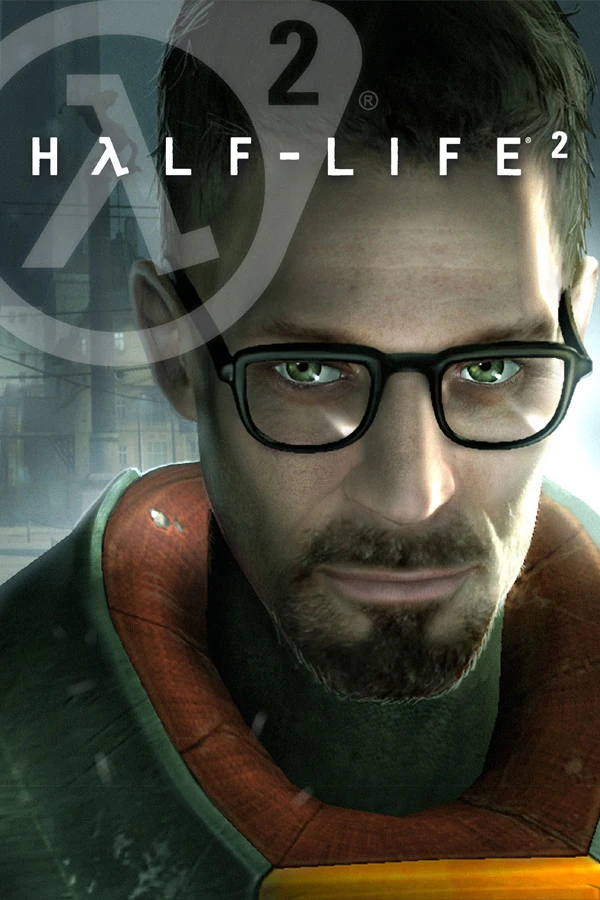
Half-Life 2 Still Feels Like Stealing Fire
Half-Life 2 Still Feels Like Stealing Fire I played Half-Life 2 for the first time in late 2004 — not on launch day, but a few weeks later, on a friend’s clunky Dell with a fan that sounded like a dy
Half-Life 2 Still Feels Like Stealing Fire

I played Half-Life 2 for the first time in late 2004 — not on launch day, but a few weeks later, on a friend’s clunky Dell with a fan that sounded like a dying lawnmower. We’d just finished Doom 3, which felt like walking through someone else’s anxiety dream: all jump scares, flickering lights, and oppressive silence. Then we loaded up HL2. And within three minutes — literally, while Gordon Freeman was still standing on that train platform watching the sky darken — my friend leaned over and whispered, “Dude. This isn’t a game. It’s a place.”
He wasn’t wrong.
You Don’t Learn Physics — You *Feel* Them
The Gravity Gun isn’t a gimmick. It’s the reason Half-Life 2 never feels like it’s holding your hand. Yeah, you get the crowbar early — and yes, it’s satisfying as hell to smash crates or whack a headcrab off your face — but the Gravity Gun changes everything. Not because it’s flashy (though launching a sawblade into a Civil Protection officer’s chest is deeply stupid fun), but because it makes physics part of the conversation.
You learn its limits by failing: try lifting a car and it wobbles violently, threatening to flip and crush you. Try grabbing a soda can mid-air and watch it spin, then realize you can aim the spin — flick your wrist and send it spiraling sideways into a barnacle’s tongue. The Source engine didn’t just simulate weight; it simulated consequence. A thrown radiator doesn’t just hit a soldier — it knocks him back, stumbles him, maybe sends him stumbling into a wall where another enemy has to step around him. That creates openings. That creates moments. Not scripted set-pieces — real, messy, emergent little victories.
And Valve didn’t bury this behind tutorials. They just… handed it to you in Ravenholm, after you’d already survived the zombie horde and Father Grigori’s shotgun sermons. No text pop-up. No voiceover. Just a weapon humming in your hands, and a pile of junk nearby. You had to poke at it. You had to test it. Because curiosity, not instruction, was the tutorial.
City 17 Isn’t a Backdrop — It’s a Character With Bad Posture
Let’s be real: most FPS cities in 2004 were either generic war zones or sterile sci-fi sets. City 17? It slumps. It leaks. Its concrete is stained with rust and something vaguely organic. You don’t walk through it — you navigate its exhaustion. Graffiti isn’t rebellious slogans; it’s desperate, half-erased symbols scrawled on cracked tile. Civil Protection officers don’t patrol — they loiter, leaning against walls, radios crackling with bored static. Even the air smells damp, like wet brick and stale electricity.
That texture isn’t decoration. It’s worldbuilding you absorb without thinking. When Alyx says, “They’re watching everything,” you believe her — because you’ve seen the scanners hover, heard the distorted PA announcements, watched a citizen get dragged away for “non-compliance” while no one looks up from their coffee cup. There’s no exposition dump about oppression. You feel it in how people move: shoulders hunched, eyes down, conversations cut short when a scanner passes overhead.
And yeah — the Combine are terrifying, but not because they’re monstrous. They’re bureaucratic. Their soldiers wear ill-fitting uniforms. Their dropships land with the mechanical sigh of overworked machinery. Their propaganda feels like bad corporate training videos. That’s scarier than any alien monster. It’s fascism wearing sensible shoes.
Combat That Breathes — Not Just Shoots
Most shooters in 2004 treated combat like a math problem: health + ammo + cover = win. Half-Life 2 treats it like improvisation.
Take the AR2 — the Combine pulse rifle. Primary fire? Tight, precise, almost surgical. Secondary fire? That energy ball? Slow, visible, telegraphed — but devastating. So you choose: do you snipe the sniper on the roof, or do you lob an energy ball into the group below and watch them dissolve into shimmering dust? Neither is “correct.” Both are yours.
Then there’s the RPG — not just for striders, but for timing. You don’t just aim and fire. You track the gunship’s arc, lead it, wait for it to bank — and then fire. Miss once? You’re scrambling for cover while it circles back. Hit? The explosion rattles your speakers and your nerves.
Even the shotgun feels different. Pump-action, yes — but the SPAS-12’s spread isn’t forgiving. Get greedy and you’ll blast a hole in the wall instead of the zombie’s chest. And if you’re low on shells? You better start using those bugbait pods — chucking them near antlion tunnels, then ducking back as a wave of chitinous rage swarms your enemies. It’s messy. It’s loud. It’s alive.
Alyx Vance Wasn’t Just a Sidekick — She Was the First Real NPC You *Trusted*
Look, I love Barney Calhoun. He’s got heart, he’s got terrible jokes, and his disguise is somehow both pathetic and heroic. But Alyx? She changed everything.
She doesn’t follow you like a robot dog. She reacts. She ducks when gunfire cracks overhead. She calls out cover positions before you ask. She’ll pick up a dropped grenade and toss it back — not because the AI says so, but because she sees the threat and acts. And she talks to you — not at you. Her voice isn’t narration. It’s banter, worry, sarcasm, fatigue. When she says, “You okay?” after a tough fight, it lands because she sounds like she means it.
This wasn’t just tech wizardry — it was writing that treated NPCs like people who’d lived in this world longer than you had. She knew City 17’s shortcuts. She remembered Kleiner’s lab layout. She got annoyed when you broke her dad’s stuff. That’s why, years later, when Episode Two ended on that cliffhanger, when she was taken, it didn’t feel like a plot device. It felt like a punch to the gut. Because she wasn’t “the girl.” She was Alyx. And you’d spent hours walking beside her, not behind her.
What It All Adds Up To — And Who It’s For Today
Here’s the blunt truth: Half-Life 2 hasn’t aged gracefully — it’s aged richly. The textures look soft. Some animations are stiff. The sprint button wasn’t added until Episode One. And yes, the ending is famously abrupt.
But none of that matters, because what Half-Life 2 did, what it still does, is prove that immersion isn’t about graphics. It’s about consistency. About making every object interactable, every character believable, every corridor feel like it belongs to a larger, breathing world.
It’s not for everyone. If you need constant dopamine hits, cinematic set-pieces every five minutes, or bullet-sponge enemies who respawn endlessly — nah. This game asks you to pay attention. To listen. To experiment. To care about a city that’s barely holding itself together — and the quiet, stubborn people trying to fix it.
So yeah — play it. Not because it’s “important history.” Play it because it still works. Because Alyx still makes you smile. Because launching a dumpster into a strider’s leg still feels like cheating physics — and winning. Because sometimes, the best thing a game can do isn’t blow your mind. It’s make you forget you’re holding a controller at all.
And honestly? That’s rarer than ever.
References & Further Reading
Loading comments...
Loading similar articles...