
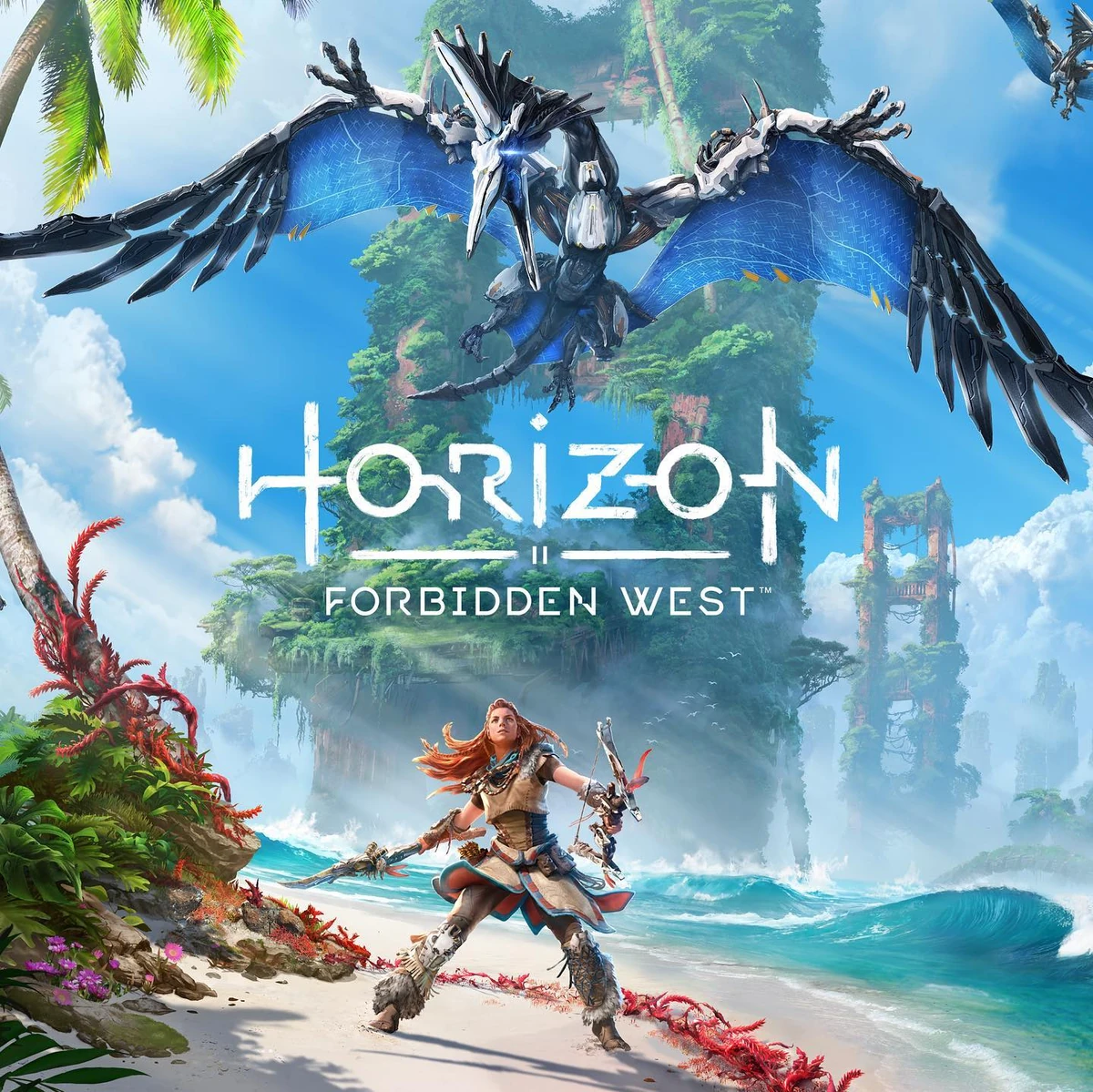
Horizon Forbidden West Isn’t a Bigger Zero Dawn — It’s a Different Kind of Exhaustion
Horizon Forbidden West Isn’t a Bigger Zero Dawn — It’s a Different Kind of Exhaustion I played Horizon Forbidden West for 87 hours.
Horizon Forbidden West Isn’t a Bigger Zero Dawn — It’s a Different Kind of Exhaustion

I played Horizon Forbidden West for 87 hours. Not because I loved it, exactly — more like I kept waiting for the moment it would click, the way Zero Dawn did around hour 12, when Aloy climbed that first ridge and the world opened up like a held breath finally let go. But Forbidden West never quite unclenched. It’s lush, technically staggering, emotionally earnest… and somehow heavier. Like carrying someone else’s backpack uphill for miles while they cheerfully point out pretty flowers.
The Map Is Huge. The Pace Is Not.
Let’s get this out of the way: yes, the world is bigger. Yes, it’s prettier — those Pacific coast sunsets? Gorgeous. The redwood groves feel lived-in, not just rendered. But here’s the thing nobody talks about: Forbidden West makes you walk more. Not in a “oh, nice hike” way — in a “why is there no fast travel until halfway through the game and even then it costs 50 metal shards per trip?” way. You’ll spend real minutes watching Aloy trudge across cracked desert asphalt or wade waist-deep through algae-choked canals, scanning every rusted billboard and collapsed overpass for a single schematic or skill point. It’s not exploration — it’s inventory management with scenery.
And don’t get me started on the climbing. Zero Dawn had fluid, intuitive verticality. Forbidden West gave Aloy a grappling hook, which sounds fun!, but then buried it under three layers of context-sensitive prompts, stamina bars that drain faster than your patience, and ledges that look climbable but aren’t, because the game decided this particular rusted pipe doesn’t count as “grippable.” I died more times falling off cliffs trying to reach a single collectible than I did fighting Thunderjaws.
Machines That Feel Like Boss Fights (Even When They’re Not)
The new machines are undeniably cool — the Sunwing’s solar flare attack, the Tremortusk’s seismic stomp, the Clawstrider’s terrifyingly agile pincer lunge. But Guerrilla made them hard. Not smart-hard. Not tactically interesting-hard. Just statistically hard. Their health bars are absurd. Their stagger windows are microscopic. And if you miss one shot with your tearblast arrow? Congrats, you just spent six minutes dodging, healing, and praying your ammo doesn’t run out before you land that fourth critical hit on its weak point.
Worse, the AI doesn’t adapt — it just escalates. A group of four Watchers will suddenly call in two Sawtooths and a Glinthawk mid-fight, not because it makes sense, but because the game needs to justify its own inflated difficulty curve. It stops feeling like hunting. It starts feeling like paperwork with teeth.
Aloy’s Got More Friends Now — And Way Less Room to Breathe
Ashly Burch’s voice work is still stellar — raw, weary, sarcastic when she needs to be. But the writing around her got… polite. Everyone speaks in full sentences. Everyone has a tragic backstory delivered via five-minute cutscene monologue. Even the Tenakth rebels debate philosophy while mid-battle. It’s respectful, thoughtful, very well-acted — and emotionally exhausting. There’s no breathing room. No awkward silence. No “yeah, okay, let’s just go kill that machine” energy. It’s all gravitas, all the time.
And Sylens? Oh god, Sylens. Lance Reddick’s performance is magnetic — but the character himself feels like a narrative black hole. Every time he shows up, the plot grinds to a halt so he can deliver three paragraphs of cryptic, vaguely threatening exposition, then vanish again. He’s less a character, more a punctuation mark: pause. Sylens appears. Pause. Sylens leaves. His presence doesn’t deepen the story — it just adds another layer of “wait, what did he mean by that?”
The Underwater Stuff? Actually Great
Here’s where I’ll give credit where it’s due: the underwater sections in San Francisco and the flooded ruins near Las Vegas are fantastic. Not because they’re revolutionary, they’re basically Subnautica lite, but because they finally let you breathe (figuratively). The pace slows. The music swells quietly. The lighting shifts. You glide past coral-covered skyscrapers, watch schools of bioluminescent fish dart between submerged cars, and actually feel like you’re discovering something ancient and quiet. It’s the only part of the game where the scale feels meaningful instead of oppressive. Too bad it’s also the only part where the UI disappears — no HUD, no minimap, no quest markers. Just you, the water, and the weight of history. Why couldn’t the rest of the game borrow five minutes of that calm?
Burning Shores? More Like Burning Time
The Burning Shores DLC — set on a volcanic island with flying machines and Angela Bassett’s Regalla returning — is technically impressive. But tonally? It doubles down on everything that already felt strained. The new enemies are even tankier. The platforming is even more finicky. And the story leans harder into the “ancient tragedy + noble sacrifice” shtick until it feels less like catharsis and more like emotional whiplash. By the end, I wasn’t moved. I was just tired. Tired of saving the world. Tired of explaining my choices to yet another faction leader. Tired of hearing “the fate of humanity rests on your shoulders” for the seventh time before lunch.
So Who’s This For?
Look — if you loved Zero Dawn’s sense of wonder, Forbidden West will disappoint you. It trades mystery for exposition, spontaneity for checklist-driven progression. If you’re the kind of player who enjoys meticulously upgrading every weapon, maxing out every skill tree, and treating the map like a spreadsheet — yeah, you’ll have a blast. It’s built for completionists, not wanderers.
But if you just want to be in a world — to sit on a cliff edge, watch clouds move, listen to wind through ruined buildings, and feel like the world exists whether you’re there or not? Forbidden West keeps nudging you back toward the objective marker. It’s a gorgeous, ambitious, deeply earnest game that mistakes density for depth. It wants so badly to matter — and sometimes, that very desire makes it harder to care.
I finished it. I even liked parts of it. But I haven’t gone back. Not once. And I think that says more than any review ever could.
References & Further Reading
Loading comments...
Loading similar articles...