
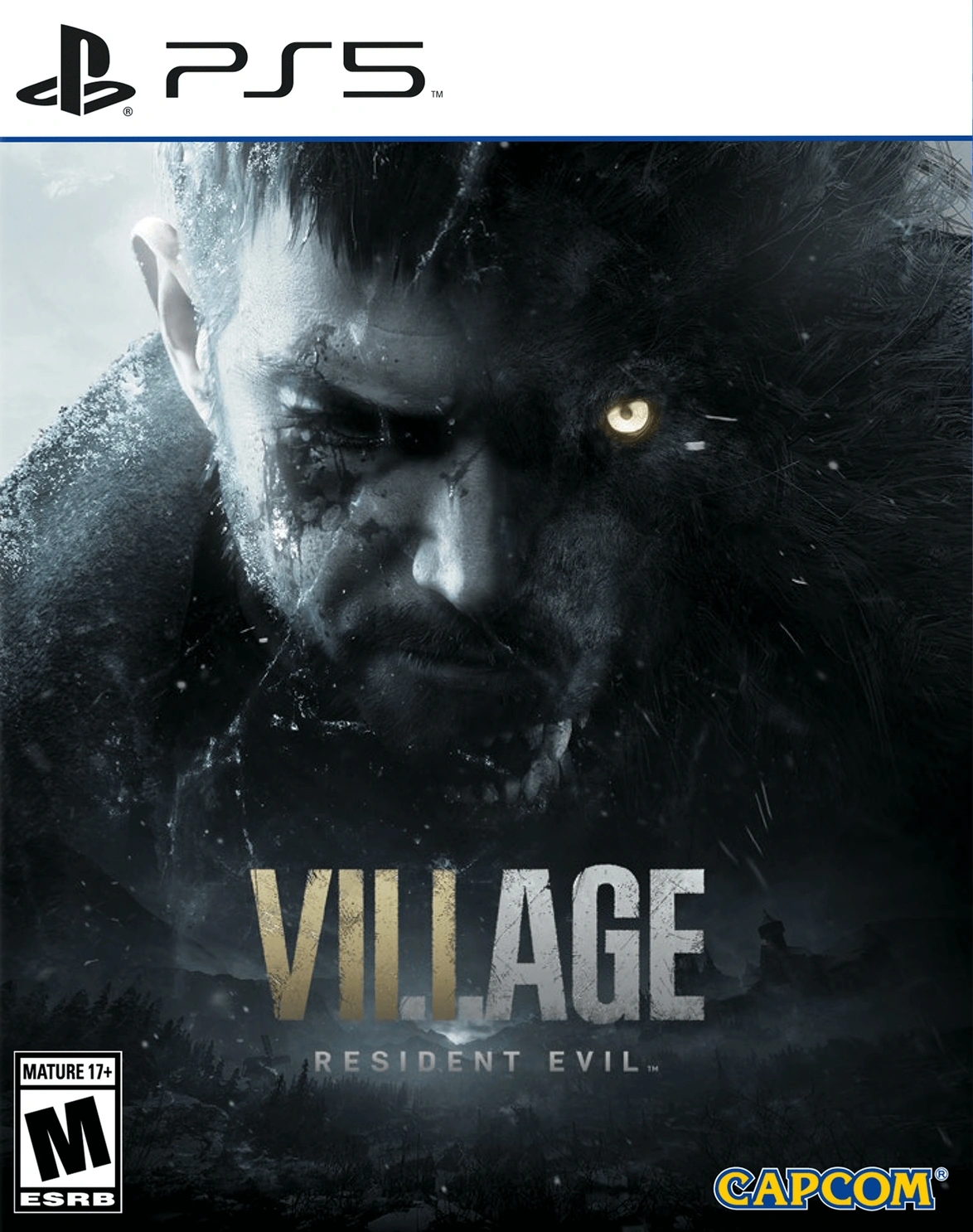
The Village That Forgot It Was Supposed to Be Scary
The Village That Forgot It Was Supposed to Be Scary I played Resident Evil Village on launch day, sat cross-legged on my couch, controller sweating in my palm, and halfway through the castle I paused
The Village That Forgot It Was Supposed to Be Scary

I played Resident Evil Village on launch day, sat cross-legged on my couch, controller sweating in my palm, and halfway through the castle I paused, just stared at the screen, and muttered: “Wait. Is this… a theme park?”
Not because it’s cheerful. Far from it. But because everything feels designed, polished, almost aggressively coherent. The werewolves snarl, sure—but they also have boss arenas. The castle’s gothic corridors twist and turn like a Disney ride with jump scares bolted on. And Lady Dimitrescu? She doesn’t just loom—she poses. You catch her mid-stride, cape billowing, head tilted just so, like she’s waiting for her close-up. Which, honestly? She probably is.
That’s the first thing you notice about Village: it’s not trying to unsettle you in the slow, suffocating way RE7 did. No damp basement full of whispering mold. No VHS static bleeding into reality. This is horror with a budget, a marketing team, and a very clear sense of its own iconography.
A Town Full of Set Pieces (and One Very Confused Protagonist)
Ethan Winters walks into that snowy village like he’s wandered onto a soundstage—and he kind of has. Every major location is a self-contained horror diorama:
- The village square, all crooked timber and frozen corpses, where villagers swarm like angry bees but only when you step into their trigger zone.
- The castle, dripping with velvet and taxidermy, where every corridor leads to either a puzzle or a cutscene—not necessarily in that order.
- The factory, all grinding gears and chemical vats, where enemies literally pour out of pipes like scripted gags.
- The reservoir, all dripping concrete and submerged statues, where the water physics are weirdly precise and the lighting is suspiciously cinematic.
It’s slick. Too slick sometimes. There’s a moment early on—when Ethan first stumbles into the village after the car crash—where you expect dread. Instead, you get ambient music swelling like a trailer voiceover. The camera lingers. A crow flaps away. You’re not being hunted—you’re being introduced. To the show.
And Ethan? Poor guy. He’s spent the last game getting dissolved, reassembled, stabbed, and emotionally eviscerated. Here, he’s mostly silent, reactive, a walking pair of hands holding whatever weapon you’ve upgraded most recently. His trauma isn’t internalized—it’s externalized as inventory management. You don’t feel his panic; you optimize it.
Combat That Feels Like a Negotiation
Let’s talk about guns. Not the idea of guns—the actual math behind them. Village ditches RE7’s clunky, desperate shooting in favor of something closer to RE4: weighty, punchy, deeply satisfying when you land a headshot—but also strangely forgiving. Enemies stagger, reload animations play out fully, and ammo drops like candy from defeated bosses. You’re rarely out of bullets. You’re just occasionally out of patience.
The merchant—Mr. Hand, that unnerving, glove-wearing dealer who pops up like a cursed IKEA catalog—isn’t just a shop. He’s the game’s id. You’ll spend hours upgrading shotgun shells while ignoring the fact that your daughter is literally missing. His shop menu is more immersive than half the story beats.
And yes—the inventory grid still exists. Yes, it’s still annoying. But here’s the thing no one talks about: Village actually teaches you how to manage it. Early on, you’re forced to choose between herbs and ammo. By hour five? You’re juggling grenade mods, weapon upgrades, and crafting materials like a logistics coordinator. It’s not elegant—but it works. And weirdly, it makes you feel capable. Like Ethan’s not just surviving—he’s adapting. Even if his face says otherwise.
The Villains Are All Having More Fun Than You Are
Dimitrescu gets all the memes, and deservedly so, but let’s be real: she’s the only one who seems to know what genre she’s in. The others? They’re doing their best.
There’s Salvatore, the mutated chef who turns people into sausages—except his dialogue sounds like he’s reading off a Yelp review (“This one’s got good marbling…”). There’s Moreau, the aquatic abomination who lives in a flooded greenhouse and occasionally shouts philosophy about evolution while swimming in circles. And then there’s Mother Miranda, the big bad, who delivers monologues with the gravitas of a TED speaker who’s just discovered Nietzsche and bought a robe.
They’re all technically threatening. But none of them land with the same gut-punch as Jack Baker’s “You’re not leaving.” from RE7. Why? Because Village trades psychological unease for spectacle. You don’t fear Miranda—you wait for her next cutscene. You don’t dread the castle—you look forward to its boss fight’s parry timing.
Shadows of Rose? Yeah, I Played It. And Then I Closed It.
The Winters’ Expansion added Shadows of Rose, a third-person sidestory set 16 years later, where adult Rose explores a surreal psychic realm made of memories and regrets. It’s visually stunning. The combat’s tighter. The writing tries harder. And yet—it lands like a beautifully wrapped apology note for a party you didn’t enjoy.
Rose’s story asks real questions about inherited trauma, identity, and whether survival is the same as living. It’s thoughtful. It’s mature. It’s also completely disconnected from the tone of the main game—like finding a poetry chapbook taped inside a popcorn bucket.
I respect it. I just… didn’t need it. Not after spending 20 hours dodging werewolves in a snowglobe version of Transylvania.
So Who’s This For?
Not the folks who miss the raw, analog terror of RE1 or even RE7. Those players will find Village too loud, too bright, too certain of itself.
But it is for people who like horror that moves fast, looks incredible, and treats tension like a rhythm—build it, break it, rebuild it with better lighting. It’s for players who want a game that respects their time, gives them tools, and never makes them guess how to solve a puzzle (the crank goes here, the key fits there, the lever opens that door). It’s for fans of action-horror who secretly wish Dead Space had more dialogue options and fewer zero-G jumps.
And yeah—it’s for people who want to stand in front of Lady Dimitrescu, watch her slowly descend a staircase while wind machines blow her hair, and think: Damn. Okay. That’s cool.
Is it the scariest Resident Evil? No.
Is it the most fun? Maybe.
Does it know exactly what it is—and lean into it, unapologetically? Absolutely.
I still replay the village section sometimes. Not for the scares. Just to walk around. Listen to the distant howls. Watch the snow fall on cobblestones that were probably modeled in Unreal Engine 5 before breakfast. It’s not horror anymore. It’s atmosphere. It’s vibe. It’s a place I’d revisit—not because I’m afraid of what’s around the corner, but because the corner itself looks really damn good.
References & Further Reading
Loading comments...
Loading similar articles...