
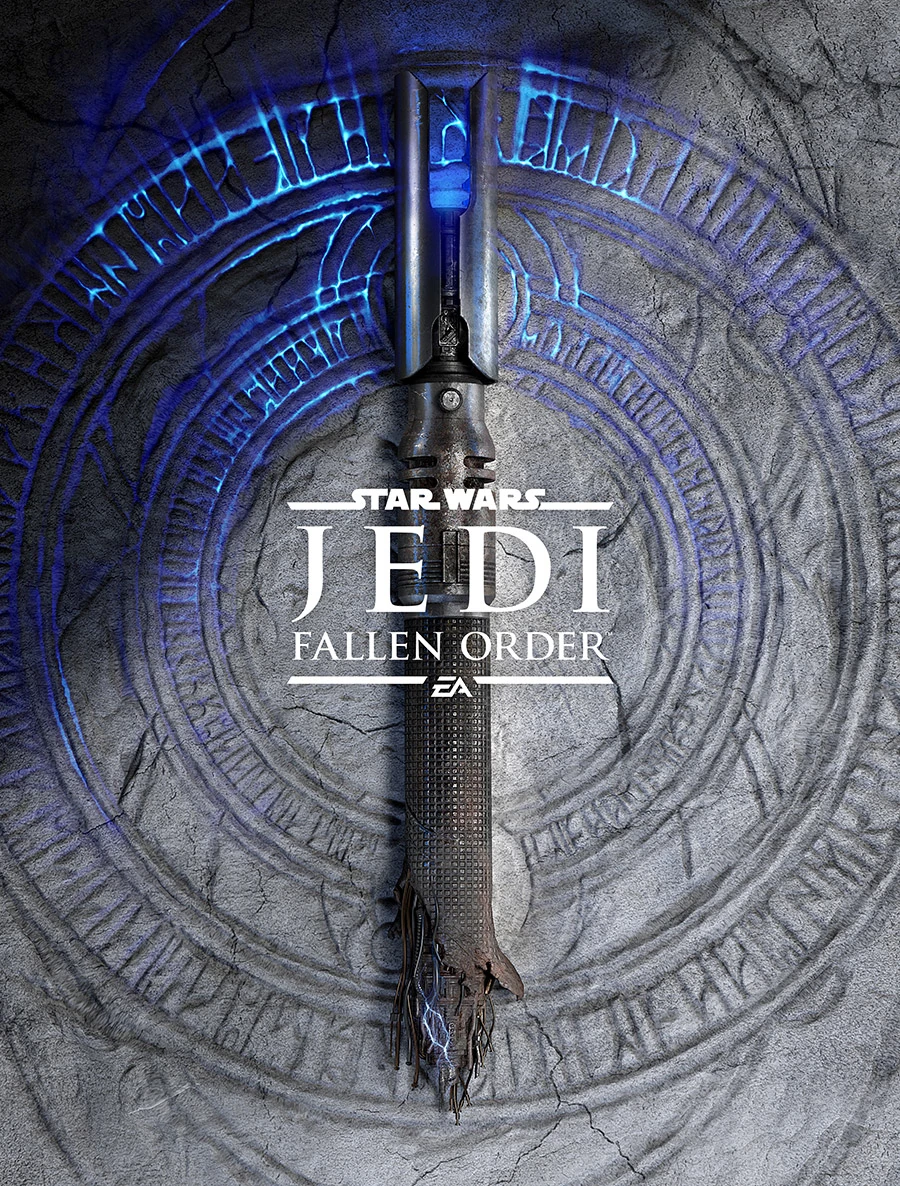
Why I Still Boot Up *Jedi: Fallen Order* When My Steam Library Has 400 Games
Why I Still Boot Up Jedi: Fallen Order When My Steam Library Has 400 Games I reinstalled it last Tuesday. Not for nostalgia. Not because I was bored.
Why I Still Boot Up *Jedi: Fallen Order* When My Steam Library Has 400 Games

I reinstalled it last Tuesday. Not for nostalgia. Not because I was bored. Because my dog knocked over my coffee mug, I had to clean up the mess, and when I sat back down, still damp, slightly annoyed, I opened Fallen Order instead of checking email or scrolling TikTok. It’s weird how a game about trauma, failure, and rebuilding something broken can feel like comfort food.
It Feels Like Learning to Breathe Again
Let’s get this out of the way: Cal Kestis isn’t some cocky Jedi prodigy who flips off cliffs and one-shots Stormtroopers with his eyes closed. He’s shaky. His lightsaber hums like it’s holding its breath. Early on, he fumbles parries. He gets stunned. He dies, a lot, and the death animation isn’t flashy. It’s just him dropping to one knee, breathing hard, BD-1 beeping nervously in the background like a concerned labrador.
That vulnerability matters. Most Star Wars games (and let’s be real—most action games) treat combat as an escalation ladder: more enemies, bigger weapons, faster combos. Fallen Order treats it like muscle memory. You don’t unlock “better moves.” You earn precision. The block timing window is narrow. Dodging has weight—you can’t spam it. And if you try to rush a Purge Trooper without reading their tells? Yeah. You’ll watch your own head roll across the floor. Twice.
I remember getting stuck on that first Inquisitor fight, Second Sister, all red blades and zero patience, for nearly an hour. No rage-quitting. Just sitting there, muttering, “Okay. What did she do before that spin?” Then trying again. And again. Not because the game forces me to, but because it makes me want to understand her rhythm—not just beat her.
That’s rare. Most games reward reflexes. This one rewards attention.
The Map Isn’t Just Big—It’s *Hungry*
You’ve heard the term “Metroidvania,” sure. But Fallen Order doesn’t just borrow the structure—it weaponizes the frustration of hitting a wall. Remember that collapsed bridge on Zeffo? The one you stare at for ten minutes, jumping at the edge, wondering if you missed a ledge? You did miss it. But not because it’s hidden—it’s just barely out of reach… until you get the double jump.
And then, click, the world opens. Not with a cutscene fanfare, but with a quiet, almost embarrassed “oh.” You backtrack, and suddenly that hallway you walked past three times now has a crawl space. That locked door on Kashyyyk? Turns out it wasn’t locked—it was sealed, and you needed the Force push upgrade you already have, but didn’t think to try because the UI never told you to.
Respawn didn’t design a map. They designed a puzzle box made of planets. Every location feels like it was built around your progression—not just gated behind upgrades, but shaped by them. Bogano isn’t just your tutorial planet. It’s the game whispering, “Here’s how the rules work. Now go break them.”
Also: the climbing. Oh god, the climbing. It’s not parkour. It’s clambering. Your hands slip. Cal grunts. Sometimes he misses a grip and dangles, swinging like he’s got actual mass and panic. It’s exhausting—and deeply satisfying when you finally pull yourself up onto that ledge and realize you’re looking down on a whole new section of the map you couldn’t see before.
BD-1 Is the Best Sidekick in Star Wars History (Yes, Even Over Chewie)
Look. I love Chewbacca. I respect R2-D2’s commitment to silent suffering. But BD-1? BD-1 is human. Or droid-adjacent. He whines when Cal falls. He chirps encouragement after a tough fight. He gets startled by birds on Kashyyyk and hides behind Cal’s leg. He also hacks terminals, scans weak points, and patches your health—but only after you’ve taken three hits and he’s seen you wince.
He doesn’t talk. He reacts. And somehow, that makes him feel more alive than half the voice-acted characters in AAA games.
There’s a moment late-game where BD-1 gets damaged during a cave-in. Cal carries him, cradling the little droid like he’s hurt himself. No music swells. No dialogue. Just Cal walking slowly, BD-1’s lights dimmed, his usual chirps replaced by faint, irregular beeps. You don’t need subtitles to understand what’s happening. You feel it in your shoulders.
Also: he’s tiny enough to fit in your pocket. Which means you can literally shove him into tight spaces to scan things. I still haven’t forgiven Respawn for making me care so much about a robot that looks like a startled toaster.
Saw Gerrera Doesn’t Show Up to Give You a Quest—He Shows Up to Scare You Straight
Saw’s appearance isn’t a “cool cameo.” It’s a gut-punch disguised as exposition. You meet him in a ruined temple on Kashyyyk—not in some grand throne room, but crouched in the dirt, surrounded by broken droids and scorched walls, muttering about ghosts and betrayal. He doesn’t trust Cal. He doesn’t trust anyone. And he’s absolutely right to be suspicious.
Forest Whitaker’s performance is all restraint—no booming speeches, no heroic poses. Just exhaustion, paranoia, and the kind of quiet fury that makes you lower your own voice while listening. His scenes aren’t about advancing the plot. They’re about grounding it. Reminding you that this isn’t a galaxy of clean heroics—it’s a war zone where survival looks like hiding in caves and trusting no one, not even your own memories.
And yeah, he gives you a mission. But it’s not “go here, kill that.” It’s “prove you’re not another ghost sent to finish what Vader started.” That tension lingers long after he’s gone.
The Ending Isn’t Hopeful—It’s *Earned*
Let’s talk about that final lightsaber duel. Not the flashiest fight in the game—but maybe the most honest. Cal isn’t suddenly “master level.” He’s bleeding. His hand is shaking. He wins not because he’s stronger, but because he stops running. He stops trying to be the Padawan he was, or the Jedi he thinks he should be—and just fights, right now, with what he’s got.
And the ending cutscene? No triumphant music. No montage of allies rallying. Just Cal kneeling in the rain on Ilum, igniting his blade—not with certainty, but with quiet, trembling resolve. The camera holds. The hum of the saber fills the silence. You don’t feel like you’ve “won.” You feel like you’ve survived. Like maybe, just maybe, you’re ready to begin again.
That’s why I keep coming back.
Not because it’s perfect—there are pacing hiccups, some fetch quests feel like filler, and yes, the inventory management is needlessly fussy—but because it’s honest. It treats Star Wars not as myth, but as history. A bruised, complicated, deeply human history. It remembers that hope isn’t loud. It’s the sound of a breath held too long—and then finally, slowly, let go.
So who’s this for? Not the kid who wants to feel like Luke Skywalker on Tatooine, blasting Sand People with zero consequences. Not the player who skips cutscenes and grinds for gear scores. This is for the person who still flinches at a sudden noise, who keeps old notebooks full of half-finished ideas, who understands that rebuilding something broken takes time—and sometimes, you have to climb the same cliff three times before your hands stop slipping.
Me, apparently. And probably you, too—if you’re willing to admit it.
References & Further Reading
Loading comments...
Loading similar articles...