
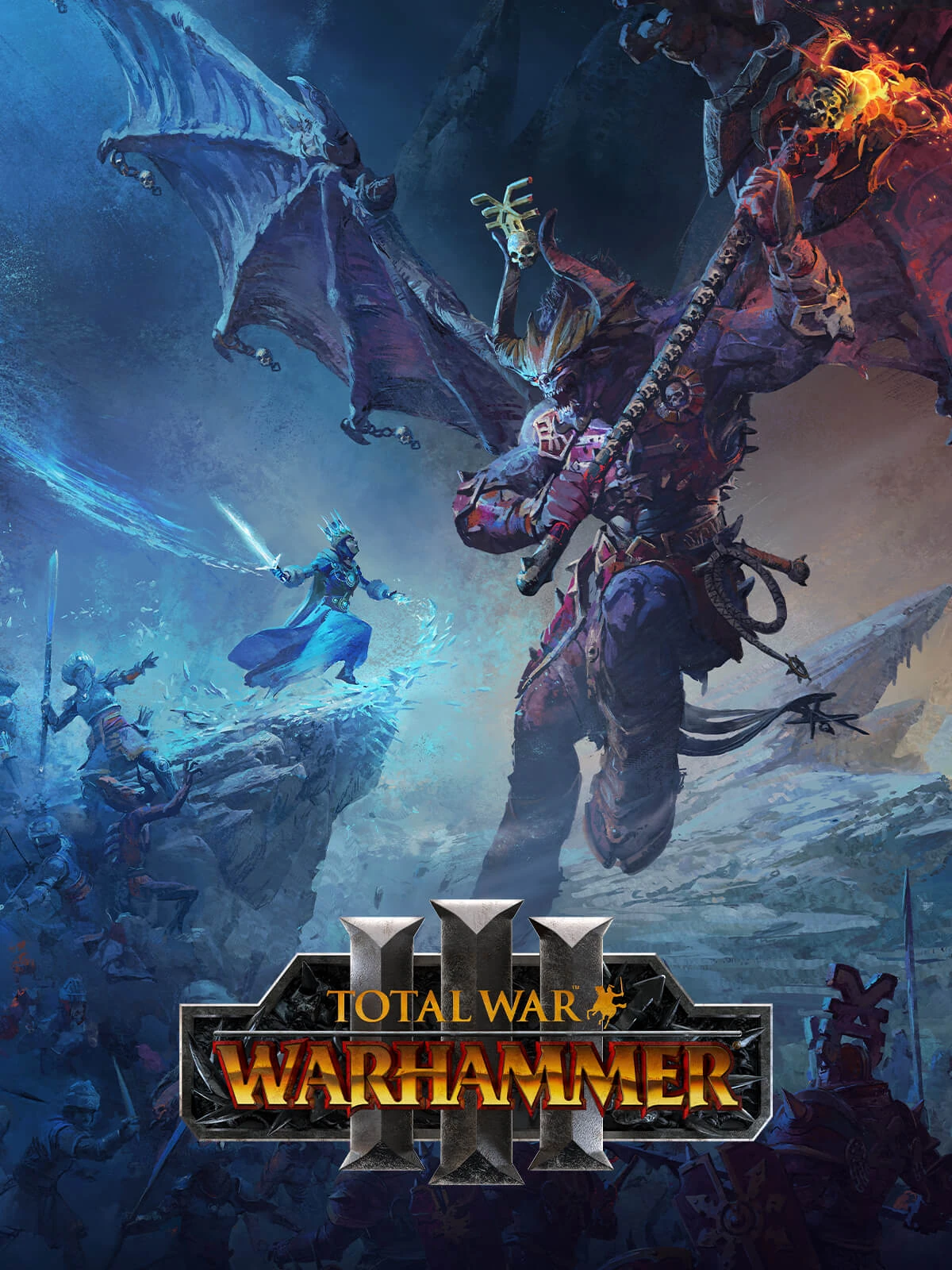
Total War: Warhammer III Isn’t the End—It’s the Unraveling
Total War: Warhammer III Isn’t the End—It’s the Unraveling I’ll admit something embarrassing: I spent three hours trying to kill a single Nurgle demon lord in the Realm of Chaos campaign.
Total War: Warhammer III Isn’t the End—It’s the Unraveling

I’ll admit something embarrassing: I spent three hours trying to kill a single Nurgle demon lord in the Realm of Chaos campaign. Not because it was hard—but because I kept getting distracted watching his bloated, grinning body sweat green pus onto the battlefield while his followers cheerfully waded through it like it was bathwater. That’s when it hit me: this game doesn’t just do chaos—it lives in the weird, gross, hilarious, deeply stupid logic of Warhammer Fantasy. And that’s why, despite everything, including the DLC mess, I still boot it up every other Tuesday.
You Don’t “Win” Here. You Survive Long Enough to See What Happens Next.
The campaign structure feels less like strategy and more like flipping through a fever-dream comic book where every page has its own weather system, moral compass, and sense of timing. The opening tutorial, The Lost God, isn’t really a tutorial—it’s a tone-setter. You play as a desperate Kislevite shaman chasing a bear-god who’s been literally eaten by Chaos. You fight cultists in snowstorms that freeze your cavalry mid-charge. You get betrayed by a dragon who speaks in riddles and then vanishes into mist. It’s absurd. It’s brilliant. And it tells you, right away: this isn’t Rome or Shogun. Nobody here obeys physics—or common sense.
Then comes Realm of Chaos: a linear, story-driven arc where you pick one of the four Dark Gods and try (and mostly fail) to stop the apocalypse. Yes, you’re playing as Khorne sometimes—and yes, his armies literally lose morale if they don’t kill someone every turn. That’s not flavor text. That’s a hard-coded mechanic. Your general will start screaming at his troops if they haven’t spilled blood in 48 hours. You have to schedule massacres. That’s not satire. That’s balance.
Immortal Empires Is Either the Greatest Thing Ever or a Glorious Trainwreck
Let’s be real: Immortal Empires is the reason most people bought this game. It’s the entire trilogy—every faction, every unit, every cursed swamp and glittering citadel—dumped into one map the size of continental Europe. You can play Bretonnia and Grand Cathay and the Ogre Kingdoms and the Vampire Counts—all in the same campaign. You can send Kislevite ice-witches to ambush Skaven rat-ogres near the World’s Edge Mountains, then watch them get trampled by a Chaos Dwarf war engine rolling out of the Badlands.
But here’s the thing nobody talks about enough: it’s exhausting. Not in a bad way—more like trying to read War and Peace while juggling flaming torches. Turn timers stretch. Diplomacy windows take three clicks to open. You’ll spend 20 minutes negotiating with an AI-controlled Tzeentch faction only to realize they’ve already declared war on themselves. Yet somehow, it works. Because Creative Assembly didn’t just stitch together old assets. They rebuilt diplomacy trees for each race (Nurgle lords offer “plague treaties”; Slaaneshi nobles demand tribute in aesthetic refinement), added faction-specific event chains (Cathayan dragons age visibly over decades, gaining new abilities—and eventually turning feral), and made sieges feel different depending on who’s attacking whom. A Kislev siege? Frostbite slows attackers. A Chaos Dwarf siege? The walls bleed black oil before collapsing.
The Battles Are Loud, Stupid, and Perfect
Forget “tactical realism.” This is opera. You line up your units—and then the screen fills with flying daemons, artillery that shoots screaming skulls, and giant monsters that eat entire infantry blocks like popcorn. Siege battles got a serious overhaul: now defenders can collapse towers on top of attackers, or flood sections of the wall with molten metal. There’s even a “minor settlement” battle type—tiny, scrappy fights over fishing villages or border forts that last five minutes and somehow feel more tense than a 30-minute clash at Altdorf.
And multiplayer? Honestly? It’s the first time in years I’ve seen co-op campaigns not devolve into passive-aggressive note-passing. Simultaneous turns mean no waiting. You can control Kislev while your friend runs Cathay—and yes, you can coordinate a joint assault on the Chaos Wastes… only to watch both of you get ambushed by a wandering Ogre migration (which, by the way, is a full-blown campaign event—you’ll see their campfires moving across the map like slow, hungry stars).
But Yeah—About That DLC…
Look. I pre-ordered Shadows of Change. I wanted those legendary lords. I wanted Naryska Leysa’s golden armor and Saytang the Watcher’s dragon-riding animations. So I paid £20. Then I opened the store page and saw one new unit model, two minor ability tweaks, and three lords who all looked suspiciously similar to existing ones. My jaw didn’t drop—I just sighed, closed the tab, and went back to grinding out a 120-turn Kislev campaign against the forces of decay.
Creative Assembly’s response wasn’t great at first. The price hike was jarring—especially after years of £8 DLCs with two solid lords and a new army. But here’s what matters: they listened. The February 2024 update added proper new units (Kislev’s Winter Guard got frost-bolt crossbows; Cathay’s Jade Warriors now have shield-wall formations), rebalanced magic schools, and gave all factions meaningful late-game progression paths. Was it too little, too late? Maybe. But it was sincere. And in this industry? That counts.
Who’s This For?
Not for people who want clean, efficient strategy. Not for fans of historical accuracy—or even consistent lore. (Yes, a dragon-emperor from Cathay once negotiated peace with a bloodthirsty Khornate warband by offering them better-quality meat. It worked.)
This is for players who laugh when a Giant gets stuck in a doorway for eight turns. Who pause mid-battle just to watch a Slaaneshi hedonist duel a dwarf rune-lord in slow motion. Who care less about “optimal builds” and more about whether their favorite legendary lord will finally, finally, get eaten by a Greater Daemon of Tzeentch during a diplomatic summit.
Total War: Warhammer III isn’t the end of anything. It’s the messy, glorious, occasionally infuriating peak of a series that stopped pretending to be serious about ten years ago—and started having fun instead. It’s not perfect. It’s bloated. It’s expensive. It’s got bugs that make you question reality.
But damn—it’s alive. And right now, that’s rare enough to matter.
References & Further Reading
Loading comments...
Loading similar articles...