
Dark Souls 3 Isn’t a Finale — It’s a Last, Loud Scream Into the Dark
Dark Souls 3 Isn’t a Finale — It’s a Last, Loud Scream Into the Dark I died 87 times in the first 22 minutes of Dark Souls 3. Not counting the ones where I fell off ledges or got startled by a crow.
Dark Souls 3 Isn’t a Finale — It’s a Last, Loud Scream Into the Dark

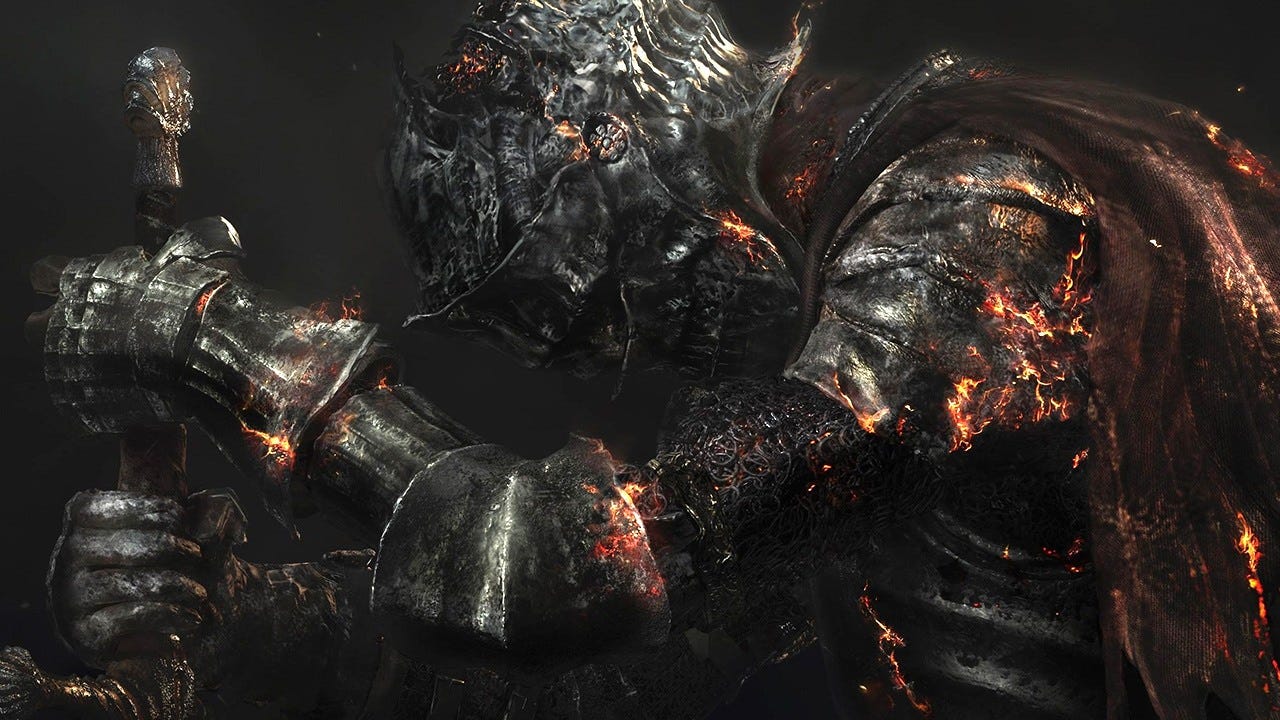
I died 87 times in the first 22 minutes of Dark Souls 3. Not counting the ones where I fell off ledges or got startled by a crow. Just boss-related deaths. The opening fight — with that hulking, screaming knight in the High Wall courtyard — isn’t a tutorial. It’s an ambush. A declaration. A slap across the face with a gauntlet covered in dried blood and regret.
And somehow? I laughed. Not the nervous kind. The oh-hell-yes kind. Like recognizing an old, terrible friend.
That’s the thing no review ever quite nails: Dark Souls 3 doesn’t want you to feel clever. It wants you to feel alive, even when you’re ragged, half-dead, low on estus, and convinced your controller is plotting against you.
You Don’t Learn the Game — You Relearn Yourself
The combat here is faster than DS1, sharper than DS2, and way less forgiving than either. Parries? Possible — but the timing window is tighter, the punish steeper if you whiff. Dodging? Still a dance, but stamina management is brutal. One mistimed roll into a fireball, and you’re watching your health bar evaporate like sugar in hot tea.
Yet, and this is what keeps me coming back, it never feels cheap. Not really. Every death has a fingerprint: I lunged too early. I held block too long and got staggered. I didn’t notice the second hollow archer on the balcony. There’s no “gotcha” RNG. Just consequence. Clean, cold, and utterly fair.
The weapon balance is weirdly brilliant. That +10 Lothric Knight Sword? Feels like swinging a brick wrapped in velvet. The Farron Greatsword? Slow, heavy, devastating — but only if you’ve got the stamina and space. And don’t get me started on the Crow Quills. Yes, they’re broken. Yes, they’re overpowered. And yes, I used them for three full playthroughs because sometimes you just want to stab a dragon in the face sixteen times before it remembers to breathe fire.
It’s not “balanced” in the spreadsheet sense. It’s weighted. Like real swords. Like real exhaustion.
Lothric Isn’t a Kingdom — It’s a Dying Memory
Forget “medieval fantasy.” Lothric feels like walking through the last pages of a burned manuscript. Crumbling spires draped in ash-grey banners. Statues frozen mid-prayer — not in reverence, but in petrification. You see it everywhere: knights turned to stone mid-swing, monks calcified at their lecterns, even entire battlements slowly dissolving into dust as you watch.
This isn’t set dressing. It’s world-building as emotional erosion. The High Wall isn’t just a location — it’s the first gasp before the chokehold. Irithyll isn’t just “a gothic city” (ugh, sorry — I hate that phrase); it’s a necropolis built inside a necropolis, where every corridor smells like wet stone and forgotten vows. And the Grand Archives? A library cursed into a labyrinth, shelves tilting like vertebrae, books whispering nonsense in dead languages — and yeah, I did spend 45 minutes climbing bookshelves looking for illusory walls. Found three. Got two titanite slabs and a cursed ring that made my character sneeze green smoke. Worth it.
There’s no hand-holding. No map pins. Just landmarks you learn to trust — the jagged silhouette of the cathedral spire, the distant chime of a bell tower, the way fog rolls down the valley instead of up. You navigate by memory, by instinct, by the quiet dread of realizing you’ve seen that cracked statue before — and that means you’re going in circles. Or worse: you’re supposed to be.
NPCs: Beautiful, Broken, and Occasionally Glitched Out of Time
Dark Souls has always had characters who feel like they wandered in from a different, sadder novel. Dark Souls 3 doubles down — and then trips over its own lore.
Anri of Astora doesn’t just talk about duty — she aches with it. Her voice cracks when she says “Lothric…” like it’s a wound she keeps picking at. Hawkwood? Oh god, Hawkwood. A man who’s spent centuries choosing the least bad option, each one carving deeper grooves into his face. You meet him in a ruined chapel, kneeling not in prayer but in exhaustion — and later, you find out he’s been there, in that exact pose, for decades. Not waiting. Enduring.
But yeah — the bugs are real. I once triggered a major NPC questline by accidentally dropping a key item into a crack in the floor near Firelink Shrine. The game registered it as “delivered,” and the guy vanished forever, muttering about “unkept promises” while fading into static. Another time, a covenant leader accused me of betrayal… five minutes after I’d met her for the first time. I swear I heard her sigh audibly through the speaker.
Does it break immersion? Sometimes. But honestly? It fits. Lothric isn’t a polished machine. It’s falling apart. Glitches feel less like programming errors and more like symptoms — another layer of decay.
That Damn Poison Swamp (and Why I Keep Going Back)
Let’s talk about the Road of Sacrifices. Yes, that swamp. The one where every step sinks you knee-deep in muck, enemies lurch out of murk like drowned saints, and the air hums with the low, wet buzz of something ancient and very, very hungry.
It’s awful. It’s oppressive. It’s perfect.
Because in that swamp — between the corpse-lilies and the cross-bearing horrors — you find the Ashen Estus Ring. And the Black Knight Sword. And a hidden path behind a waterfall that leads to a shrine guarded by a knight who only appears if you’ve killed exactly seven hollows with fire damage in the last hour. (No, I’m not making that up. Yes, I tested it.)
Dark Souls 3 rewards obsession. Not completionism — obsession. The kind where you reload a save just to check if that suspicious patch of moss hides a lever. The kind where you sprint past a boss door three times just to confirm the enemy placement hasn’t changed. The kind where you whisper “just one more try” while your eyes burn and your wrist throbs.
It doesn’t care if you’re “good.” It cares if you’re present.
Who Is This For? (Spoiler: Not Everyone)
Look — if you need constant feedback, clear goals, or reassurance that you’re “doing it right,” this isn’t your game. If you want story spoon-fed in cutscenes, or combat that scales to your level, or even basic accessibility options… yeah, walk away. Seriously. Go play something warm and forgiving. You deserve it.
But if you miss the feeling of standing on a windswept parapet at 2 a.m. staring at a distant tower you know is reachable — even though you’ve died 19 times trying to get there — and thinking “Okay. One more time. Just one more time…”?
Then Dark Souls 3 is for you. Not as a challenge to conquer. Not as a trophy to unlock. As a place to breathe, hard and ragged, in a world that refuses to look away.
It’s not the end of the series. It’s not even the best one — DS1 still hits deeper, in quieter ways. But it’s the loudest. The most urgent. The one that grabs your collar and says, “You’re still here. So am I. Now — move.”
I died 87 times in those first 22 minutes.
I came back 88.
And I’d do it again tomorrow.
References & Further Reading
Loading comments...
Loading similar articles...