
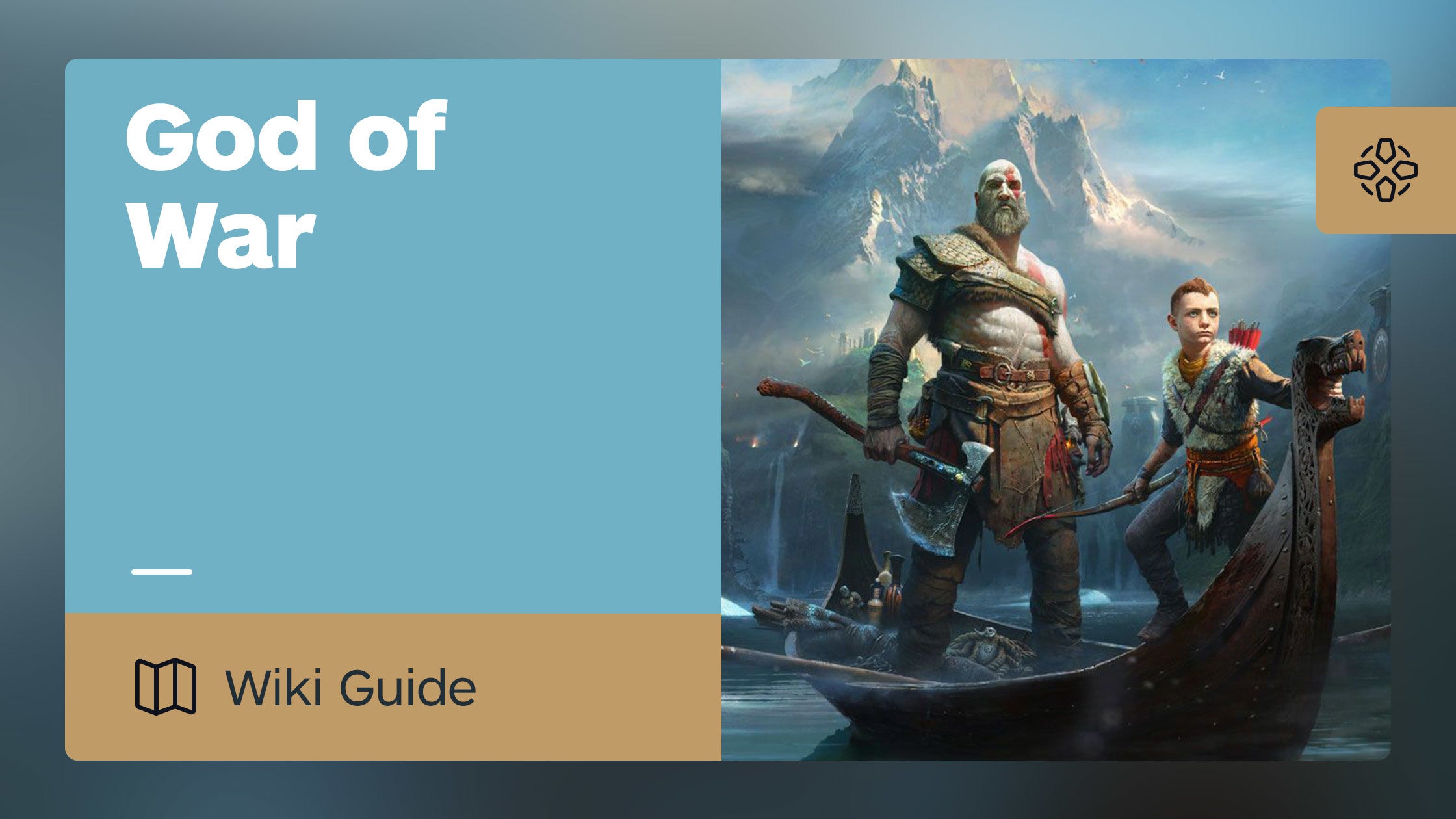
God of War (2018) Is Still the Best Parenting Simulator Ever Made

I cried during the boat scene. Not the big one at the end, though yeah, that got me too, but the quiet one, early on, when Kratos and Atreus are just… rowing. No music. No dialogue for like two minutes. Just water slapping the hull, Atreus fidgeting with his cloak, Kratos staring ahead like he’s trying to remember how to breathe. I paused it. Got up. Made tea. Came back and watched it again.
That’s not what you expect from a game where you spend half your time slamming a magic axe into frost giants’ kneecaps.
It’s Not About the Axe—It’s About the Pause Button
Let’s get this out of the way: yes, the combat is tight. Yes, the Leviathan Axe feels heavy and dangerous and deeply personal—like it’s got its own grudge against every enemy in Midgard. But what sticks with me isn’t the perfect parry timing or the way Mjölnir’s echo effect makes your controller vibrate like a live wire. It’s how often the game makes you stop.
You’re walking through The River Pass, Atreus mutters something about birds, and Kratos doesn’t respond—not right away. You wait. He exhales. Then says, “They migrate south before winter.” And you realize: he’s never seen them do that before. He’s learning, alongside his son. Not just about Norse myths or rune mechanics—but about how to listen. How to hold space. How to let someone else finish a sentence.
That’s rare in games. Especially ones where you can rip a troll’s arm off and use it as a club.
The “Optional” Stuff Isn’t Optional—It’s the Point
IGN’s guide lists 51 Odin’s Ravens. 13 Nornir Chests. Seven language ciphers. Nine Valkyries. A whole rogue-lite realm called Niflheim where you die fast, learn faster, and eventually walk out with gear that makes you feel like a god who finally remembered how to care.
But here’s the thing no wiki tells you: most of those “collectibles” aren’t about loot. They’re about permission.
Permission to slow down. To ask Atreus, “What do you think that carving means?” and actually wait for his answer—even if it’s wrong. Permission to backtrack to Faye’s burial mound just to sit there, because the game doesn’t rush you out. Permission to fail a Nornir puzzle three times, watch Atreus sigh and say, “Dad… try the left bell first,” and realize he’s not just tagging along—he’s teaching you, too.
The Muspelheim trials? Yeah, they’re brutal. But beating the final one doesn’t unlock a stat boost—it unlocks a cutscene where Kratos watches Atreus spar alone, then quietly picks up a practice sword and joins him. No dialogue. Just movement. Just presence.
That’s not flavor text. That’s the entire thesis.
Combat Is a Conversation—And You’re Learning the Language
Kratos doesn’t shout “GET OVER HERE!” anymore. He grunts. He stumbles. He gets winded. His animations have weight, but also hesitation—like his body remembers every fight, even when his mouth won’t admit it.
And Atreus? He’s not a QTE companion or a damage sponge. He’s a variable. Some days he’s sharp, landing arrows in blind spots. Other days he panics, misses, and yells, “I’m sorry!”—and Kratos doesn’t snap. He just nods, blocks a swing, and says, “Again.”
The skill tree reflects that. You don’t just “unlock rage mode.” You unlock “Atreus’ Arrow Barrage”—but only after completing a favor where he practices archery for hours, frustrated, while Kratos sits nearby whittling wood. You earn it by watching him grow—not by grinding XP.
Even the dodge feels parental. Early on, Kratos barely sidesteps. Later? He’ll shove Atreus behind him mid-combo, take a hit to the back, and keep fighting like it’s nothing. It’s not flashy. It’s tired. It’s real.
The World Doesn’t Bend to You—It Breathes Around You
Midgard isn’t a checklist. It’s a place that changes with you.
Go back to the Lake of Nine after Chapter 7, and you’ll see new boats docked, new traders setting up stalls, new kids playing near the docks—kids who call Atreus by name now. The world doesn’t reset. It ages.
And the realms? Alfheim isn’t just “the light realm”—it’s where Atreus sees his first real reflection in a sunlit pool and asks, “Do I look like him?” You don’t get a prompt. You don’t get a “Press X to reassure.” You just stand there. Let him sit. Let the silence hang. And then, maybe, kneel beside him and say, “You look like yourself.”
That moment isn’t scripted like a cutscene. It’s baked into the geometry—the way the light falls, the way the camera lingers just a beat too long on his face. It’s subtle. It’s devastating.
Who’s This For? Honestly? Anyone Who’s Ever Been Terrified of Getting It Wrong.
Look—I’ve played this game four times. Once to finish it. Twice to find every damn raven. Once just to walk around the village, sit on benches, and listen to the townsfolk gossip about “the quiet man and his boy.”
It’s not for people who want pure power fantasy. If you need to feel unstoppable, unburdened, untouchable—you’ll bounce off this game hard. It asks too much. It gives too little in the way of easy answers. There’s no “fix” for grief. No skill point that unlocks emotional availability. You just… keep going. Keep showing up. Keep trying to say the right thing—even when you don’t know what that is.
And yeah, it’s technically a reboot. A sequel. A PS4 killer app. A PC port with slightly worse lighting. Whatever. None of that matters.
What matters is that, for once, a game made me put the controller down—not because I was stuck, but because I needed to call my sister. Because I needed to tell her I was sorry for something I said five years ago. Because Kratos spent 20 hours teaching me how to apologize without using the word “sorry.”
That’s not game design.
That’s grace.
With an axe.
And honestly? I’ll take that over any boss rush or trophy list. Every time.
References & Further Reading
Loading comments...
Loading similar articles...