
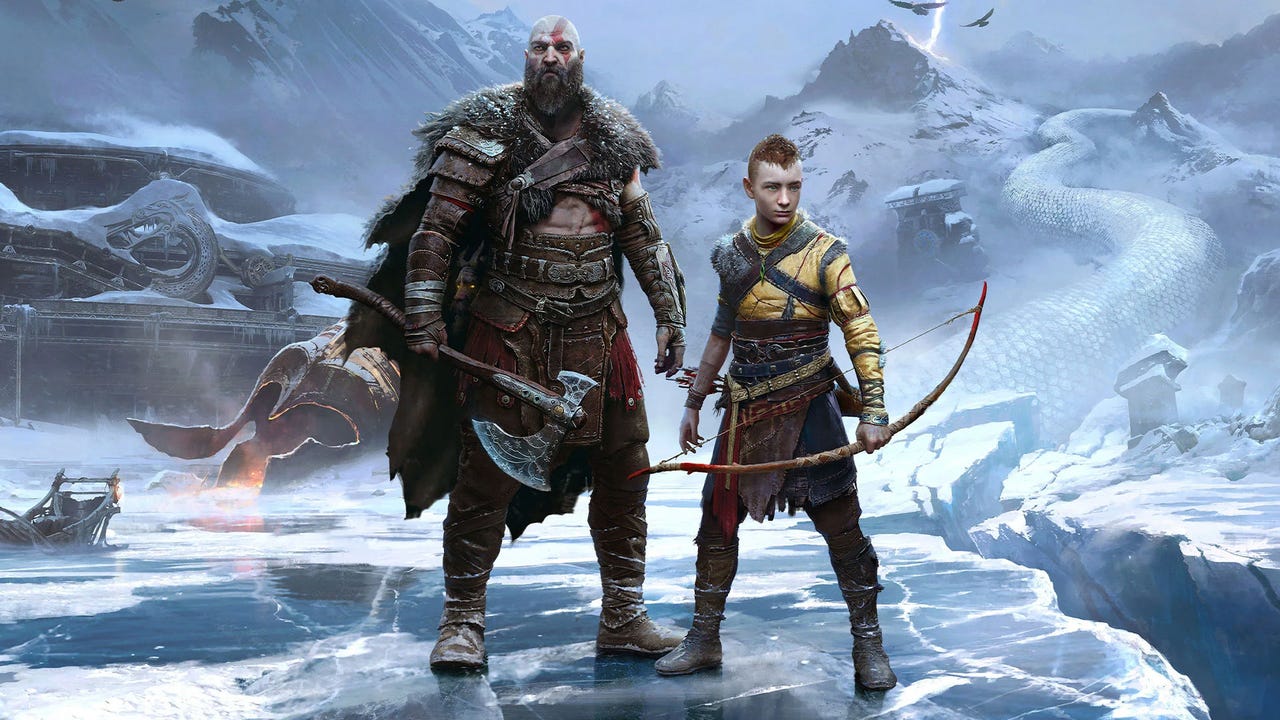
God of War Ragnarök Isn’t a Sequel — It’s a Funeral With Extra Axes

I cried twice in Ragnarök. Not the “oh god, that was sad” sniffle kind. Full-on, nose-running, eyes-blurring, “why is my throat tight?” sobs. Once was during a quiet campfire scene where Kratos tries, and fails, to tell Atreus a bedtime story. The second was when I realized, halfway through the final act, that this wasn’t just about stopping Ragnarök. It was about burying something older than Norse myth. Something Greek. Something broken.
That’s not what I expected from a game where you punch a frost giant in the face and then immediately pause to cook elk jerky.
This Time, the Rage Has a Receipt
Let’s get one thing straight: Ragnarök doesn’t try to outdo 2018’s intimacy by going quieter. It goes wider, then digs deeper. Midgard isn’t just a snow-globe anymore — it’s a launchpad. Within 20 minutes, you’re sailing past icebergs into Alfheim’s bioluminescent forests, then getting chased by a dragon across the cracked spine of Jötunheim. The scale is absurd. And yet? It never feels hollow. Because every new realm has texture — not just visual, but emotional. Alfheim isn’t “pretty lights.” It’s grief made architecture: crumbling towers humming with lost memory, bridges that flicker like half-remembered dreams. You don’t just walk through these places. You feel how badly they’ve been missed.
Combat’s sharper, too — not flashier, just meaner. The Leviathan Axe now freezes enemies mid-swing if you time your throw right. The Blades of Chaos aren’t just for crowd control; they’re your panic button, your reset, your last-ditch scream into the void. And Atreus? He’s not tagging along. He’s fighting. Not as Kratos’ shadow, but as someone who’s studied every scar on his father’s back and learned how to exploit them — in battle, in argument, in silence.
There’s a moment late-game where Kratos blocks an attack, stumbles, and Atreus doesn’t rush in to help. He watches. Waits. Lets his dad figure it out. That tiny beat, no music, no camera push, lands harder than any boss death.
The Real Boss Is Your Own Stupid Heart
Look, I love Thor. I really do. But the first time he appears — not as Marvel’s charming hammer-wielder, but as a hulking, twitchy, deeply hurt man who flinches at loud noises and chews his nails raw — I had to stop and breathe. Same with Odin. He’s not some mustache-twirling villain. He’s a retired CEO who’s spent centuries rewriting the company handbook in blood, convinced it’s the only way to keep the lights on. His voice isn’t booming. It’s tired. Like he’s read the same damn prophecy one too many times and forgot how to stop believing it.
And Freya? Oh, man. She’s the reason I put the controller down for ten minutes after our first real confrontation. Not because it’s scary, though it is, but because it’s familiar. That simmering, quiet fury of a parent who’s been lied to, manipulated, and stripped of her child? Bisutti doesn’t play it like a goddess. She plays it like a woman who just found out her son’s been sneaking out at night — except the “sneaking out” involved starting the apocalypse.
The writing doesn’t shout its themes. It bakes them into everything: the way Kratos hesitates before opening a door, the way Atreus’ journal entries get shorter and more fragmented as the pressure mounts, the way Mimir’s jokes start landing a half-second too late.
Yes, You Can Still Eat Sausages (And It Matters)
Here’s something no review talks about enough: the weight of small things. Kratos eating. Not just grabbing health — eating. Sitting down, unwrapping meat, chewing slowly. Him handing Atreus a piece without looking up. The way Sindri and Brok bicker over whether pickled herring counts as “proper sustenance.” These aren’t filler. They’re lifelines. In a story drowning in doom, these moments are oxygen.
Same with the side content. Those “optional” quests? Half of them reframe the entire narrative. One asks you to help a dwarf rebuild a bridge — turns out it’s the same bridge his brother died defending years ago. Another has you retrieving a lullaby scroll… which Kratos later uses, haltingly, to calm a terrified child. None of it’s mandatory. All of it makes the world feel lived-in, not designed.
And the combat upgrades? They’re earned through doing, not grinding. You don’t farm XP — you solve puzzles, listen to lore, talk to people. Want Atreus’ bow to hit harder? Help a grieving archer rebuild her workshop. Want Kratos’ rage meter to refill faster? Sit with a traumatized villager and hear their story. It’s subtle, but it means every stat bump feels like care, not calculus.
The Ending Doesn’t Wrap Things Up — It Lets Them Breathe
I won’t spoil it. But I will say this: Ragnarök doesn’t end with a bang or a whimper. It ends with a sigh. A long, slow exhale after holding your breath for 30 hours. There’s no grand victory lap. No “and they all lived happily ever after.” There’s packing. There’s silence. There’s a boat. There’s a choice that isn’t about saving the world — it’s about deciding what kind of person you want to be after the world stops ending.
It’s messy. It’s ambiguous. It’s human.
And honestly? It’s kind of a relief. After years of games treating closure like a trophy to unlock, Ragnarök treats it like something you have to carry — sometimes awkwardly, sometimes painfully, always privately.
So Who’s This For?
Not the “just give me cool fights” crowd. Not the “I skip all cutscenes” folks. Definitely not anyone who thinks emotional labor is a bug, not a feature.
This is for people who remember how it felt to be 16 and think your parents were invincible — then turn 32 and realize they were just trying not to break in front of you.
It’s for players who’ll pause mid-battle to watch birds fly across Vanaheim’s cliffs.
It’s for anyone who’s ever tried, and failed, to say “I’m sorry” in the exact right way.
Is it perfect? Nah. Some realms blur together. A few fetch quests drag. And yeah, the map can get overwhelming — though honestly? That’s part of the point. Life doesn’t come with a clean UI.
But Ragnarök does something rare: it makes power feel heavy. Not just Kratos’ strength, but the weight of memory, of guilt, of love you don’t know how to name. You swing that axe like it’s the only thing keeping the dark at bay — because, for a while, it is.
I finished it on a Tuesday afternoon. Didn’t jump into another game. Just sat there. Watched the credits roll. Thought about my own dad. Thought about my own kid.
Then I went to the kitchen and made pasta. Slowly. Carefully. Like it mattered.
Turns out? It did.
References & Further Reading
Loading comments...
Loading similar articles...