
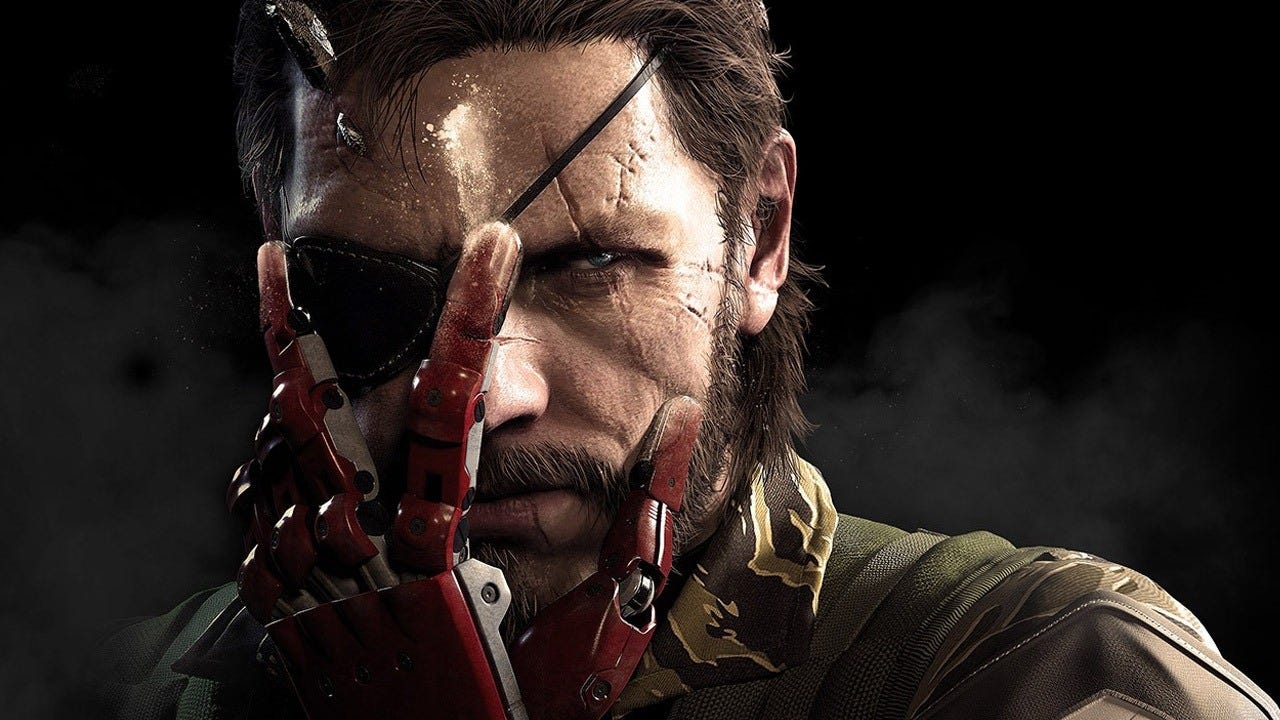
The Phantom Pain Is the Last Great Sandbox — And It Knows It
The Phantom Pain Is the Last Great Sandbox — And It Knows It I once spent 47 minutes trying to steal a single jeep. Not because it was hard. Not because the guards were smart.
The Phantom Pain Is the Last Great Sandbox — And It Knows It

I once spent 47 minutes trying to steal a single jeep.
Not because it was hard. Not because the guards were smart. But because I got distracted watching a jackal trot across a ridge at sunset, then noticed a sniper’s nest had been built inside a collapsed irrigation pipe, and then realized, oh, right, I could probably lure that patrol into the minefield behind the pipe instead of going in hot. So I did. And it worked. And then the jeep rolled down the hill, engine sputtering, and I jumped in just as a sandstorm kicked up and erased half the map.
That didn’t happen in Red Dead Redemption 2. Or Ghost of Tsushima. Or even Breath of the Wild. It happened in Metal Gear Solid V: The Phantom Pain—a game that dropped in 2015 like a grenade with the pin already pulled, and somehow still hasn’t been properly replaced.
It Doesn’t Care If You “Get It” Right Away
Look, the first hour is rough. You’re dumped on a horse in the middle of Afghanistan with no HUD, no quest markers, no hand-holding, and a voice in your ear saying, “You’re not alone,” while simultaneously refusing to tell you where your damn buddy is. Your binoculars don’t auto-zoom. Your stamina bar drains if you sprint too long. Your weapons jam in the rain. Your buddy gets shot in the face because you forgot to equip him body armor, and then he spends three days in the infirmary while your entire Forward Operating Base runs low on ammo.
It feels less like a tutorial and more like being gently shoved off a cliff by someone who’s very confident you’ll figure out how to fly on the way down.
But here’s the thing: it works. Because every system—weather, time of day, enemy patrol patterns, buddy AI, vehicle physics, even how dust kicks up when you crawl through dry riverbeds—is tuned to talk to every other system. Not in some abstract “emergent gameplay” PowerPoint slide way. In a practical, messy, “oh shit, that actually worked” way.
Try sneaking into a base at dawn. The guards are groggy, but their thermal scopes are active. Try at noon? They’re alert, but the sun blinds their optics—and yours, if you’re not careful. Try during a sandstorm? Your radar’s useless, but so is theirs. And your buddies will shout things like “Visibility’s zero—watch your flanks!” like actual people who’ve been stuck in this godforsaken desert for six months.
That’s not realism. That’s texture. And texture is what makes choices feel earned—not just “press X to stealth kill.”
Reflex Time Isn’t a Crutch. It’s a Conversation.
Remember when spotting an enemy in older stealth games meant instant failure, frantic reload, and a muttered curse into your headset? Phantom Pain doesn’t do that. It gives you Reflex Time: a half-second slow-mo window when you’re spotted—just enough to line up a tranquilizer shot, throw a smoke grenade, or drop a stun grenade behind you and vanish into the haze.
It’s not a cheat. It’s a design philosophy: you’re allowed to be human. To misjudge distance. To panic. To overcommit. To recover.
And it changes everything. I’ve used Reflex Time to:
- Snipe a guard while falling off a roof, then land silently in a pile of hay.
- Toss a flashbang into the open hatch of a moving APC, blinding the driver mid-turn.
- Lure two patrols into crossing paths, then take them both out in one smooth takedown chain.
None of this is scripted. None of it requires memorizing patrol routes. It just… happens—if you’re paying attention, and if you’ve taken the time to learn what your gear actually does.
Which brings us to—
The Gear Isn’t Gimmicky. It’s *Yours*.
You don’t unlock gadgets. You recruit the people who build them. You assign them to R&D teams. You upgrade their labs. You send them on supply raids. Then, weeks later, your buddy whispers, “We’ve got the new grappling hook prototype ready.” And suddenly, you can scale cliffs, yank enemies off watchtowers, or swing across chasms like Spider-Man after three espressos.
Same with the Walker Gears. Same with the Fulton recovery system (yes, you can Fulton a sleeping bear). Same with calling in a gunship that doesn’t instantly win the mission, but instead forces you to coordinate—spotting targets, dodging return fire, managing ammo, keeping your buddies alive while the sky turns orange.
This isn’t “content.” It’s infrastructure. And it makes every tool feel heavy, expensive, precious—not just another bullet point on a skill tree.
Mother Base Is the Best Boss Fight in the Game
Let’s be real: the story of Phantom Pain is a mess. Kojima’s final bow as a Konami employee was equal parts poetic, pretentious, and deeply unsatisfying. The ending? A shrug wrapped in symbolism wrapped in a legal dispute. You’ll care about Quiet—but only because she’s incredibly well animated, not because her arc lands. You’ll remember Skull Face’s voice—but mostly because it’s so damn good, not because his motives cohere.
But Mother Base? Mother Base works. It’s not just base-building sim filler. It’s emotional scaffolding. When your medic unit gets bombed, you lose access to critical healing items for days—forcing you to rethink infiltration routes, prioritize extraction over intel, or even call off missions entirely. When your Intel team uncovers a new enemy unit, you get a briefing video with shaky cam and grainy audio, like something intercepted mid-transmission.
It’s absurdly detailed. Pointlessly deep. And weirdly moving—because you see the cost of every decision. Every recruit you lose. Every platform you fail to launch. Every buddy who doesn’t come home.
It’s the only part of the game that feels truly lived-in. Like it breathes.
Who’s This For? (Spoiler: Not Everyone)
If you need cutscenes to tell you why you’re doing something, skip it.
If you want your stealth to be “perfectly silent, always,” skip it.
If you expect NPCs to behave like robots following a script, skip it.
But if you’ve ever stared at a guard tower, then looked at your inventory, then checked the weather report, then remembered that one guy has a habit of lighting a cigarette every 90 seconds—and thought, “What if I shoot the cigarette?”—then yeah. This is your game.
It’s not the best Metal Gear story. It’s not even the most coherent. But it is the most generous. The most trusting. The most willing to let you fail spectacularly, learn from it, and try something dumber next time.
And honestly? That’s rarer than a perfect stealth run.
I haven’t touched Phantom Pain in years. But last week, I booted it up just to watch the wind blow through the grass near Kabul. Just to hear the distant bark of a dog. Just to sit on a rock, wait for nightfall, and wonder—what if I tried it with a flamethrower this time?
Yeah. Still holds up.
Still makes me grin.
Still feels like coming home—to a home that’s perpetually on fire, slightly broken, and absolutely brilliant.
References & Further Reading
Loading comments...
Loading similar articles...