
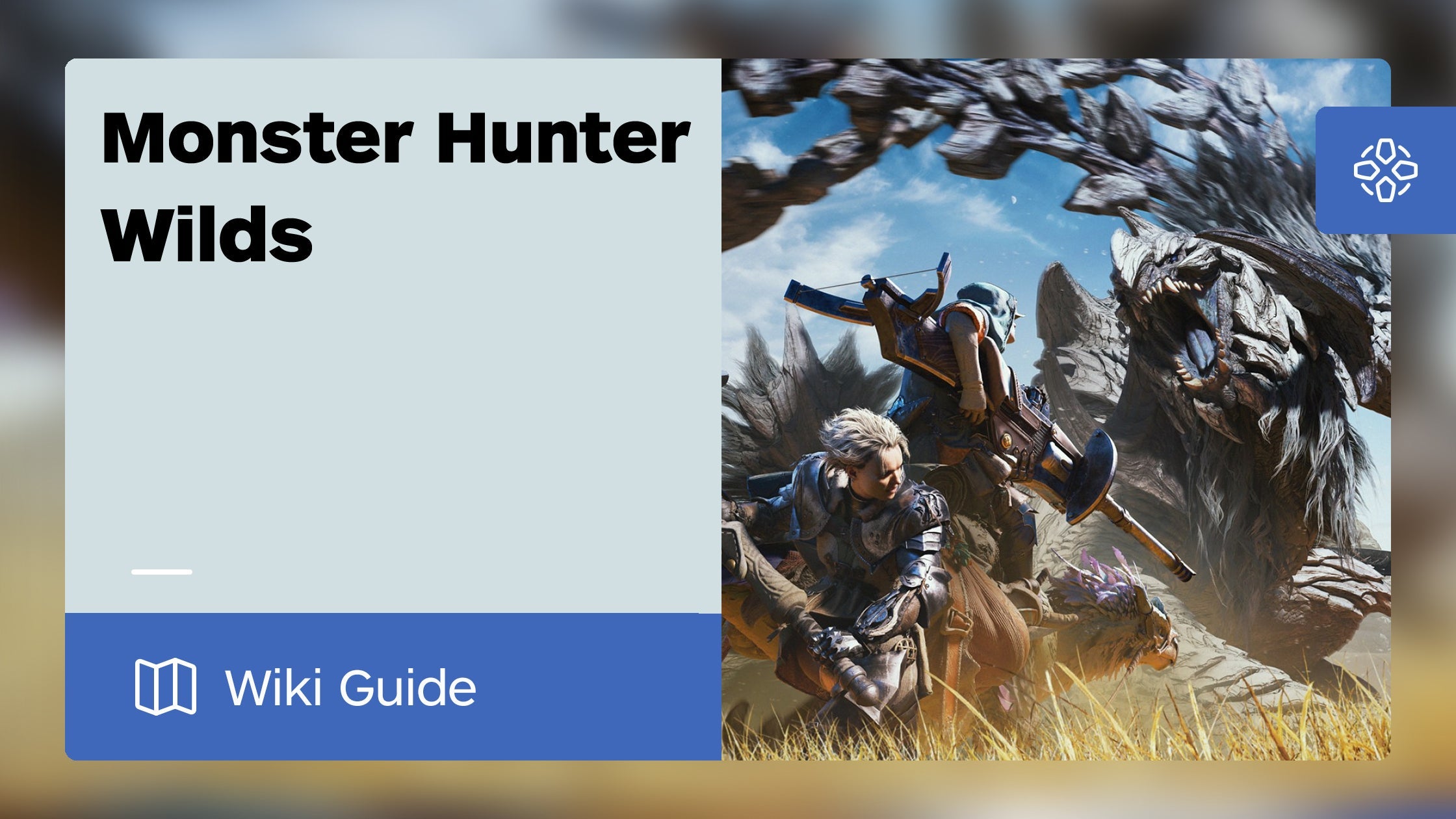
Monster Hunter Wilds Isn’t Trying to Be Your Friend — and That’s Why It Might Just Work
Monster Hunter Wilds Isn’t Trying to Be Your Friend — and That’s Why It Might Just Work I died seventeen times in the first hour.
Monster Hunter Wilds Isn’t Trying to Be Your Friend — and That’s Why It Might Just Work

I died seventeen times in the first hour. Not counting the time I got knocked off a cliff by a startled Bazelgeuse while trying to take a screenshot of its weird, iridescent scales. Or the time I spent five minutes chasing a fleeing Kulu-Ya-Ku across three biomes just to realize I’d accidentally turned off my map markers. Or the time my Palico tried to “help” by dropping a barrel on my head during a boss fight.
Yeah. It’s that kind of game.
And honestly? I love it.
Not because it’s “accessible.” Not because it “welcomes newcomers with open arms.” Monster Hunter Wilds doesn’t do that. It barely even looks at you when you walk in the door. It hands you a sword, points vaguely toward some distant mountains, and says, “Figure it out.” And somehow — against all logic, against every trend in modern game design — that feels refreshing.
No Hand-Holding. Just Hand-Cranking.
Wilds ditches the tutorial-as-plot-device nonsense we’ve seen elsewhere. There’s no NPC whispering lore into your ear while you press X to pick up a rock. Instead, you’re dropped into the Village of Whispering Winds with a basic bow, a canteen full of lukewarm tea, and a notebook that’s mostly blank. You learn by doing — by misjudging a tail swipe, by overextending a charge blade combo, by realizing too late that the “gentle forest herbivore” you’ve been stalking is actually the juvenile form of something that breathes liquid nitrogen.
The UI? Minimalist to the point of rudeness. No floating damage numbers. No big red “DODGE NOW!” prompts. Your stamina bar is tiny. Your health bar is smaller. The only thing screaming at you is your own heartbeat — and maybe your Palico, who yells “HUNTER! HUNTER!” like he’s seen a ghost every time you get hit.
That’s not lazy design. It’s intentional friction. It forces you to watch. To remember where a Rathalos lands after a dive bomb. To notice how its wings flare just before the fireball. To learn the rhythm — not from a pop-up, but from muscle memory and mild trauma.
The World Breathes — and Sometimes It Bites Back
Forget static zones. Wilds’ environments shift while you’re in them. Not just weather — though yes, monsoons flood entire valleys mid-fight, turning grasslands into mud traps and forcing you to re-route your whole strategy — but ecosystems reacting in real time. A pack of Velocidromes might scatter when a Brachydios lumbers through, triggering a chain reaction: birds flee → insects swarm → a nearby Magma Golem stirs, waking up because the ground vibrated.
You can’t just “clear” an area and move on. You have to read the air. Literally. The wind direction matters for tracking scent trails. Rain affects arrow penetration. Fog isn’t just ambiance — it mutes sound cues, so you’ll miss the telltale crunch of a Diablos charging until it’s already airborne.
It’s messy. It’s unpredictable. And it makes every hunt feel less like a boss battle and more like stepping into someone else’s complicated, slightly hostile neighborhood.
Weapons Feel Like Tools — Not Extensions of Your Ego
I picked the Insect Glaive. Big mistake. Not because it’s bad — it’s fantastic, once you stop treating it like a lightsaber — but because Wilds punishes ego. That flashy aerial combo? Great — until you land in a puddle and slip, leaving you wide open while your Kinsect flits obliviously around a flower. The Charge Blade’s phial system? Now tied to environmental heat levels. Overheat it near a lava flow, and your shield cracks permanently until you cool down — meaning you either retreat or risk getting one-shotted.
Even the “simple” weapons demand attention. The Hammer’s stagger meter? It’s not just about hitting hard — it’s about timing your strikes to match the monster’s breathing pattern (yes, they breathe differently depending on fatigue, injury, and ambient temperature). Miss two beats? Stagger resets. Hit three in a row? You trigger a unique “wind-down” animation where the monster staggers backward, giving you space — but only if you’re standing in the right spot relative to its center of gravity.
No weapon feels “broken.” None feels “safe.” They all require investment. Not just grinding — but thinking.
Armor Skills Are Actually Interesting (For Once)
Let’s be real: most Monster Hunter armor sets feel like stat spreadsheets wearing capes. Wilds flips that. Some skills only activate under specific conditions — like “Mud Walker,” which boosts mobility only when your boots are visibly caked in sludge (and yes, you can see the mud build up and wash off). Another skill, “Echo Hunter,” lets you briefly hear a monster’s heartbeat if you’ve previously wounded that exact species, not just the family, not just the genus, three times in the same session.
It rewards specialization without locking you in. You can mix and match low-rank pieces for situational utility (that “Desert Bloom” set bonus gives +10% water resistance only when cacti are blooming — and they bloom for 90 seconds after rain) and high-rank stuff for raw power. But the real joy is in the small, stupid synergies: wearing “Storm Caller” boots + “Static Fur” headgear means your Palico occasionally zaps monsters with static discharge when it sneezes. It’s dumb. It’s delightful. It’s yours.
The Multiplayer Is Weirdly Intimate
No lobbies. No matchmaking screens. You join a friend’s hunt by sending a “trail marker” — a glowing sigil you leave at a landmark (a cracked boulder, a fallen log, the corpse of a particularly annoying Rhenoplos). They follow it. If they lose the trail, they’re out. If they find it, you both get a shared buff, “Shared Resolve”, that stacks with each successful hunt together.
There’s no voice chat by default. Just emotes, quick text tags (“Need healing,” “Scouting left,” “RUN”), and a shared journal where you can scribble notes mid-hunt. My friend once wrote “WATCH THE TAIL — IT SWINGS TWICE” in all caps during a Nargacuga fight. I still have that note pinned.
It’s low-pressure. Low-stakes. Feels less like joining a raid and more like borrowing your neighbor’s ladder to fix your roof — except the roof is on fire and the ladder is made of dragon bone.
So Who’s This For?
Not for people who want to “get good” fast. Not for folks who treat games like productivity apps. Not for anyone who needs constant validation via XP bars, achievement pings, or “+1234 Attack!” notifications.
This is for the people who still remember the first time they figured out how to stun a Barroth with mud — not because the game told them, but because they watched it sink into a swamp, saw its legs lock up, and thought, “Huh. What if I…?”
It’s for players who miss the quiet thrill of realizing, halfway through a fight, that you’re winning — not because the health bar’s shrinking, but because the monster’s movements have slowed, its roars have lost pitch, and for the first time, you’re setting the pace.
Monster Hunter Wilds doesn’t want your attention. It wants your patience. Your curiosity. Your willingness to fail, loudly, messily, gloriously, until something clicks.
And yeah, sometimes that click sounds like a Palico yelling “HUNTER! HUNTER!” as you faceplant into a river.
Worth it.
References & Further Reading
Loading comments...
Loading similar articles...