
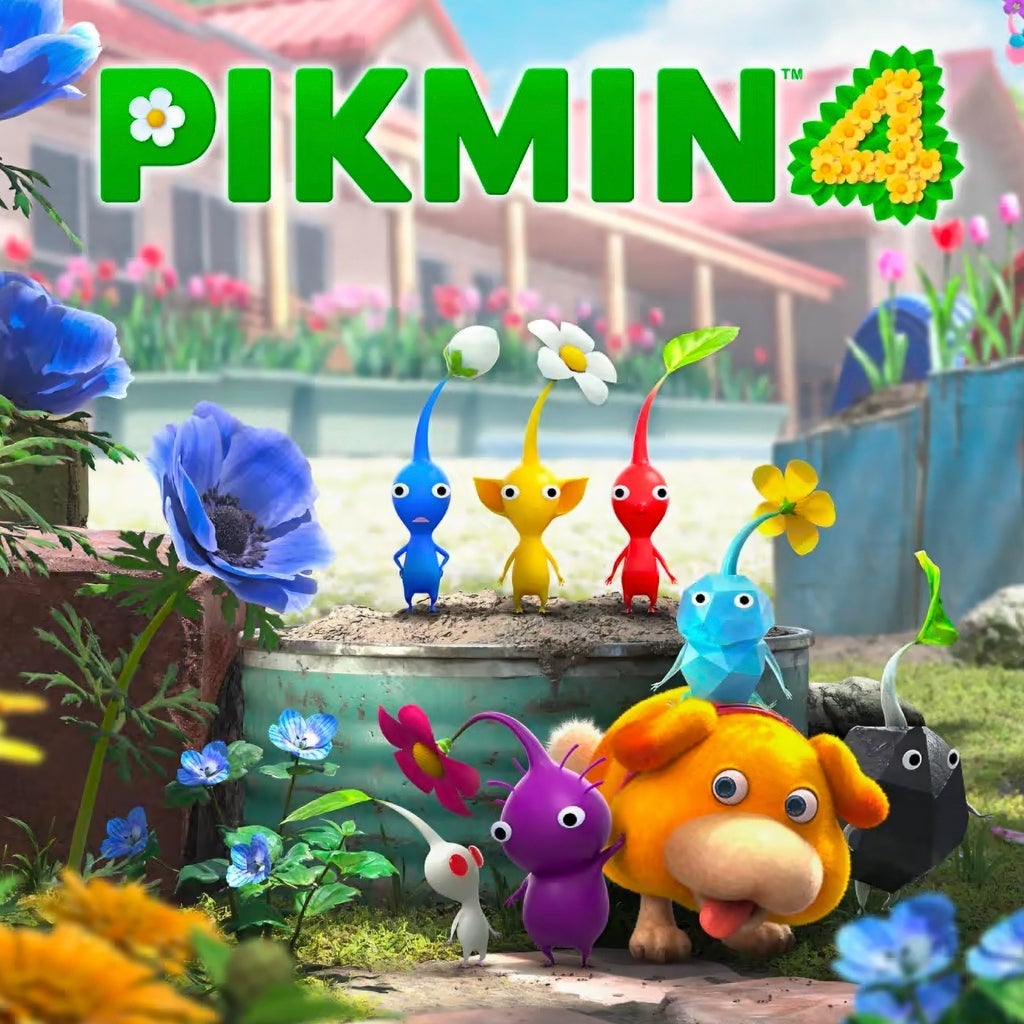
Pikmin 4 Isn’t Trying to Impress You — and That’s Why It’s Brilliant
Pikmin 4 Isn’t Trying to Impress You — and That’s Why It’s Brilliant I spent three hours on Day 3. Not because I was stuck. Not because I died. Not even because I got lost.
Pikmin 4 Isn’t Trying to Impress You — and That’s Why It’s Brilliant

I spent three hours on Day 3. Not because I was stuck. Not because I died. Not even because I got lost. I was just… watching a blue Pikmin drag a broken soda can across a mossy stone path while two others stood nearby, vibrating slightly, waiting for the next command. A butterfly fluttered past the camera. My dog barked at the TV. I paused, stretched, and ate half a granola bar. Then I told the blue Pikmin to drop the can, sent a red one to fetch a nearby firefly, and walked away for five minutes to make coffee.
That’s not filler. That’s Pikmin 4.
It’s the first game in years that treats your attention like something precious — not something to be hijacked, monetized, or optimized into a dopamine treadmill. It doesn’t beg for your focus. It earns it, quietly, patiently, with tiny acts of care: a flower blooming under a Pikmin’s foot, the soft thunk when Oatchi catches a falling berry, the way the sun dips behind the hills as Day 12 winds down and you realize, oh, right, it’s nighttime now, and you should probably head back before the predators come out.
Okay, But What Even *Is* This Game?
Look, if you’ve never played Pikmin, skip the lore dump. The story is basically “you crash-land, meet a dog, and start organizing tiny plant-people to haul junk.” That’s it. No villains with monologues. No world-ending stakes. Just a gentle, low-stakes rescue mission wrapped in soft light and practical physics.
What does matter is how it feels to move through its world. The camera floats just above your shoulders, not locked into cinematic angles. You don’t sprint, you walk. You don’t jump, you step over. There’s no stamina bar, no health meter, no HUD cluttering the screen unless you ask for it. Everything is legible, tactile, and deliberately slow. Even the enemies are more obstacle than threat — a spiky beetle isn’t trying to kill you; it’s just there, guarding a treasure, and you need to figure out how many yellows to throw, where to position Oatchi, and whether now’s the time to whistle everyone back.
And yes — you get a dog. His name is Oatchi. He’s not a mascot. He’s a partner. He fetches, he digs, he carries heavy things, he distracts enemies, he even gets tired (and will sit down, tail thumping, until you rest him). You upgrade his abilities, but you don’t “level him up” — you teach him tricks, like “hold this item while I reposition,” or “dig here now.” It feels less like RPG progression and more like training a very smart, very earnest border collie who also happens to be made of felt and optimism.
The Real Innovation Is in the Silence
Nintendo didn’t add a new Pikmin type just for novelty’s sake — though the Ice Pikmin are slick (literally), freezing enemies solid with satisfying crack sounds. They added them because the world needed another layer of response. Certain caves only open when you freeze a waterfall. Some treasures float mid-air until you build an ice platform beneath them. It’s not about power fantasy — it’s about fit. Each Pikmin type solves a specific kind of spatial puzzle, and the joy comes from recognizing the fit before you try it.
Same goes for Dandori — the game’s deep tactical mode. You’re not just commanding units; you’re choreographing little ballets of cause and effect. Send reds to burn a web → lure a crawler out of its hole → hit it with rock Pikmin → grab the treasure before the crawler regroups. Do it cleanly? You get a “Dandori Bonus” — extra points, sure, but more a quiet ping and a little ripple animation on screen. It’s Nintendo saying, “Yeah. You saw that. You timed that. Nice.” No fanfare. Just acknowledgment.
And then there’s the day/night cycle — not as a gimmick, but as a rhythm. You get 15 minutes per day. When time runs out, your Pikmin scatter. You lose any uncollected ones. But the penalty isn’t harsh — it’s human. You misjudged. You got distracted. You stopped to watch a mushroom bloom. And the game shrugs and says, “Tomorrow’s another day.” Which it is. Always.
It’s Not for Everyone. And That’s Fine.
Let’s be real: if you need constant feedback — XP pings, loot drops, skill trees, leaderboards, voice chat — this will feel like watching paint dry. There’s no multiplayer. No daily login bonus. No battle pass. No “endgame.” You finish the main campaign, and yeah, there’s still 239 treasures to find, 410 total, plus Flarlics (which increase your Pikmin cap) and side missions — but none of it forces you to keep playing. You do it because you want to see what’s behind that cracked wall, or because you’re curious if the purple Pikmin really can carry that giant gear across quicksand (they can — but only if you group them in threes and walk slowly).
Also? The difficulty curve is weirdly honest. Early days are breezy. Mid-game throws in multi-layered puzzles where you’re juggling four Pikmin types, Oatchi’s cooldowns, enemy patrol patterns, and a ticking clock — all without ever raising its voice. It trusts you to learn by doing, not by reading a tutorial pop-up. Which means yes, you’ll mess up. You’ll lose Pikmin. You’ll forget to whistle and watch helplessly as a swarm of bulborbs eats your entire blue squad. And then you’ll restart the day, adjust your plan, and try again — not because the game demands it, but because you do.
Who’s This For? Honestly?
It’s for the person who still pauses games to pet virtual dogs.
It’s for the player who bookmarks a wiki page not to “beat the game faster,” but to make sure they didn’t miss the little shrine behind the waterfall in Blossoming Arcadia.
It’s for anyone who’s ever thought, “Man, I wish games would just… let me breathe.”
It’s also for parents who want something their 7-year-old can play without rage-quitting, and for grandparents who appreciate a game where “winning” means getting home before dark — with all your Pikmin, and maybe a new friend.
Pikmin 4 doesn’t try to be the biggest, loudest, fastest thing on the shelf. It doesn’t chase trends. It doesn’t apologize for being small, thoughtful, and deeply kind. It just exists, vivid, deliberate, and full of quiet wonder, like a well-tended garden you’re allowed to visit, not conquer.
I’m on Day 42 now. Not because I have to be.
Because I like watching the sunset over Serene Shores.
Because I still haven’t found that one Flarlic behind the frozen fountain.
Because sometimes, the most radical thing a game can do is remind you that it’s okay, more than okay, to go slow.
References & Further Reading
Loading comments...
Loading similar articles...