
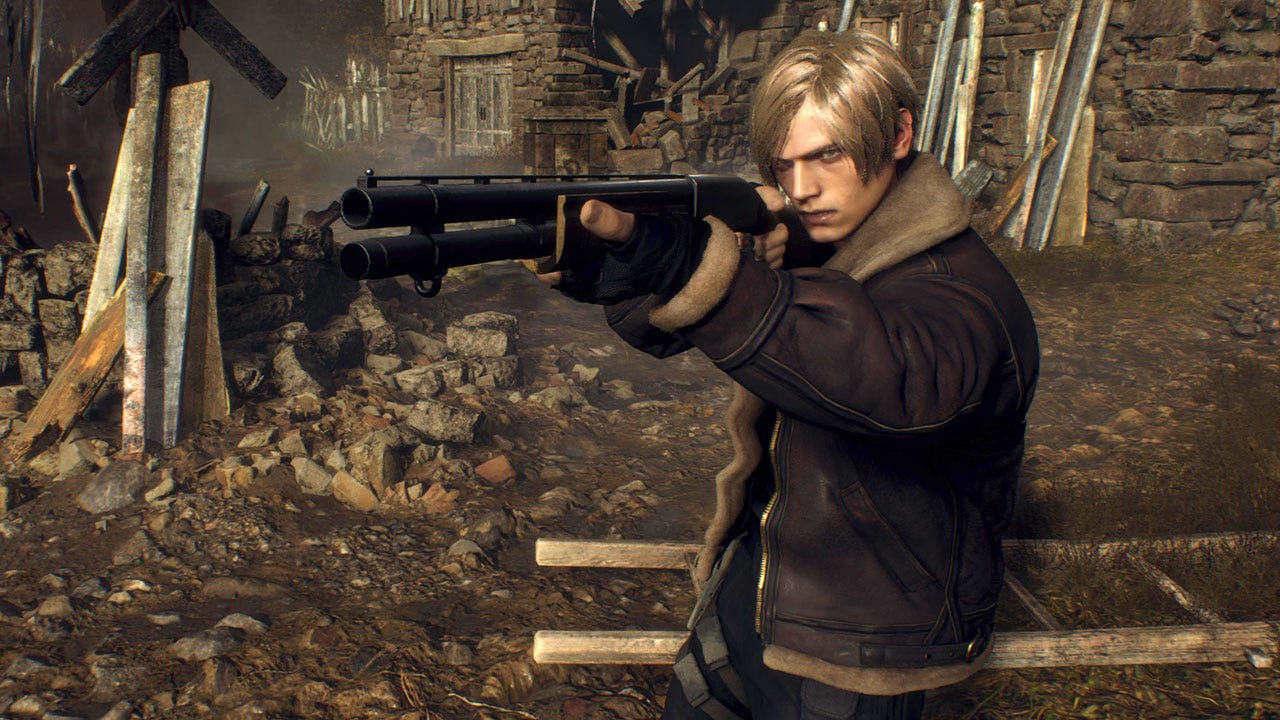
Resident Evil 4 Remake Doesn’t Just Update a Classic — It Rebuilds the Muscle Memory of an Entire Genre
Resident Evil 4 Remake Doesn’t Just Update a Classic — It Rebuilds the Muscle Memory of an Entire Genre I played the original Resident Evil 4 on a CRT TV in 2005, hunched over a PS2 controller with s
Resident Evil 4 Remake Doesn’t Just Update a Classic — It Rebuilds the Muscle Memory of an Entire Genre

I played the original Resident Evil 4 on a CRT TV in 2005, hunched over a PS2 controller with sweat on my palms and a half-eaten bag of sour gummies beside me. I remember the thunk of Leon’s boots on gravel, the way his head would jerk when he got grabbed from behind, how terrifying it was just to turn around — because you never knew if something was already there, inches from your face, waiting to bite.
Eighteen years later, I booted up the remake and immediately tried to backpedal while aiming at a Ganado swinging a chainsaw. My thumb twitched left on the stick, my index finger squeezed the trigger — and Leon didn’t freeze. He moved. Smoothly. Like he’d been waiting this whole time for me to stop treating him like a puppet on stiff strings.
Yeah. That’s the moment it hit me: this isn’t nostalgia bait. It’s a full-body recalibration.
It Feels Like Learning to Walk Again (But With a Shotgun)
Let’s get real for a second: the original RE4’s controls aged about as well as a carton of milk left in a Spanish farmhouse during July. You couldn’t strafe. You couldn’t aim and move at the same time without doing a little dance — pivot, stop, aim, fire, pivot again, pray. It wasn’t “deliberate pacing.” It was frustration disguised as tension. And don’t get me started on the knife — lining up a swing felt like threading a needle during an earthquake.
The remake fixes all that, but not by dumbing things down. It rethinks the physical language of the game. Twin-stick movement is baked in, yes — but more every action has weight and consequence. When you sidestep a thrown axe, you feel the momentum shift in your shoulders. When you parry a machete with your knife, there’s a sharp clack, a camera stutter, and Leon stumbles just enough to make you question whether you should’ve blocked or dodged instead. It’s not flashy. It’s tactile. You’re not watching Leon fight. You’re in the fight — breath shallow, fingers tight, heart rate spiking when three enemies break cover at once.
And oh god, the sound design. That wet crunch when you blast a knee out? The panicked yelp when a dynamite-wielding Ganado realizes his fuse is sizzling? It’s not just louder. It’s closer. Like someone whispered it into your ear while holding a serrated blade behind their back.
The Village Isn’t Just Scary — It’s *Alive* (And Deeply Unhinged)
Capcom didn’t just rebuild Leon. They rebuilt the world around him — brick by sun-baked brick. The original village was oppressive, sure. But this one breathes. Not in a poetic way — more like a fever dream where the air smells like damp earth, burnt hay, and something faintly sweet-rotten. Windows rattle when you run past them. Chickens scatter away from danger — then circle back, pecking at bloodstains like nothing happened. A dog barks in the distance, then cuts off mid-yip. You start checking corners before you turn them.
And the enemies? They’re no longer scripted zombies who wait politely for their turn to lunge. They flank. They throw rocks while another charges. They grab your legs and try to stab you while you’re down — forcing you to mash the knife button blind, hoping you don’t accidentally stab yourself in the thigh. One guy even kicks your gun out of your hands if you’re too slow to reload. It’s brutal. It’s unfair. It’s exactly what makes this game still feel dangerous in 2024.
Merchants Aren’t Just Shops — They’re Lifelines With Attitude
Wesker’s hairline may be gone, but the merchant is very much here — and somehow even more eccentric. He’s got new lines, new mannerisms, and a shop that feels less like a menu screen and more like stepping into a cluttered, candlelit apothecary where everything’s slightly off. His voice cracks when he’s excited. He chuckles when you sell him a rare gem — then frowns when you ask for ammo prices again. He remembers you. Not through some scripted dialogue tree, but in tiny, human-seeming ways: “Back so soon? Hope it’s not my fault you ran out of shotgun shells.”
His shop is also now fully interactive — no more pausing the world to scroll endlessly. You can drag items, combine herbs on the fly, swap attachments mid-battle prep. And yeah, the knife does break — and yeah, it hurts when it does. But that limitation forces real choices: do I risk a risky parry now, or save the knife for the boss? Do I carry extra repair kits, or spend that slot on grenades? It’s old-school resource anxiety, dressed in modern UI.
The Story Still Works — Because It Was Never About the Plot
Look, let’s be honest: the Resident Evil 4 story is a B-movie wrapped in a spy thriller dipped in Catholic guilt. Ashley Graham gets kidnapped. Leon goes to Spain. Things get weird. Very weird. There are cults. Parasites. A guy who literally turns into a giant eyeball. It’s ridiculous — and that’s the point.
What’s remarkable is how the remake leans into the absurdity without winking at the camera. The cutscenes are tighter, the voice acting sharper (especially Leon’s exhausted, dry-as-dust delivery), and Ashley… well, she’s still frustrating, but now she reacts. She stumbles. She hides. She shouts warnings — sometimes helpfully, sometimes just loudly enough to draw attention. She’s not a damsel. She’s a liability with agency. And honestly? That makes her more believable.
The horror isn’t in the monsters — it’s in the quiet moments between them. Sitting at a campfire, listening to crickets. Watching rain slide down a windowpane while you reload. Realizing, with a slow chill, that you haven’t heard a bird sing in ten minutes.
So Who Is This For?
Not just fans. Not just newcomers. It’s for people who think “classic” means “untouchable,” and then get mad when someone actually touches it — only to discover the thing they loved was hiding layers they never knew existed.
It’s for players who miss the feeling of earning a win — not by grinding, but by learning, adapting, reacting. By remembering that the red Ganado with the pipe swings slower than the blue one with the axe. By realizing that if you shoot the lantern above a group, the fire spreads — and the chaos is yours to control.
It’s not perfect. Some of the new set-pieces edge close to spectacle-over-substance. The final act drags just a hair too long. And yeah, I still yelled at Ashley once, maybe twice, when she wandered into a room full of infected monks like she was late for brunch.
But here’s what I keep coming back to: I’ve replayed RE4 more times than I care to admit. And for the first time since 2005, I didn’t go back to relive a memory.
I went back because I wanted to see what happened next.
That’s not a remake.
That’s resurrection.
References & Further Reading
Loading comments...
Loading similar articles...