
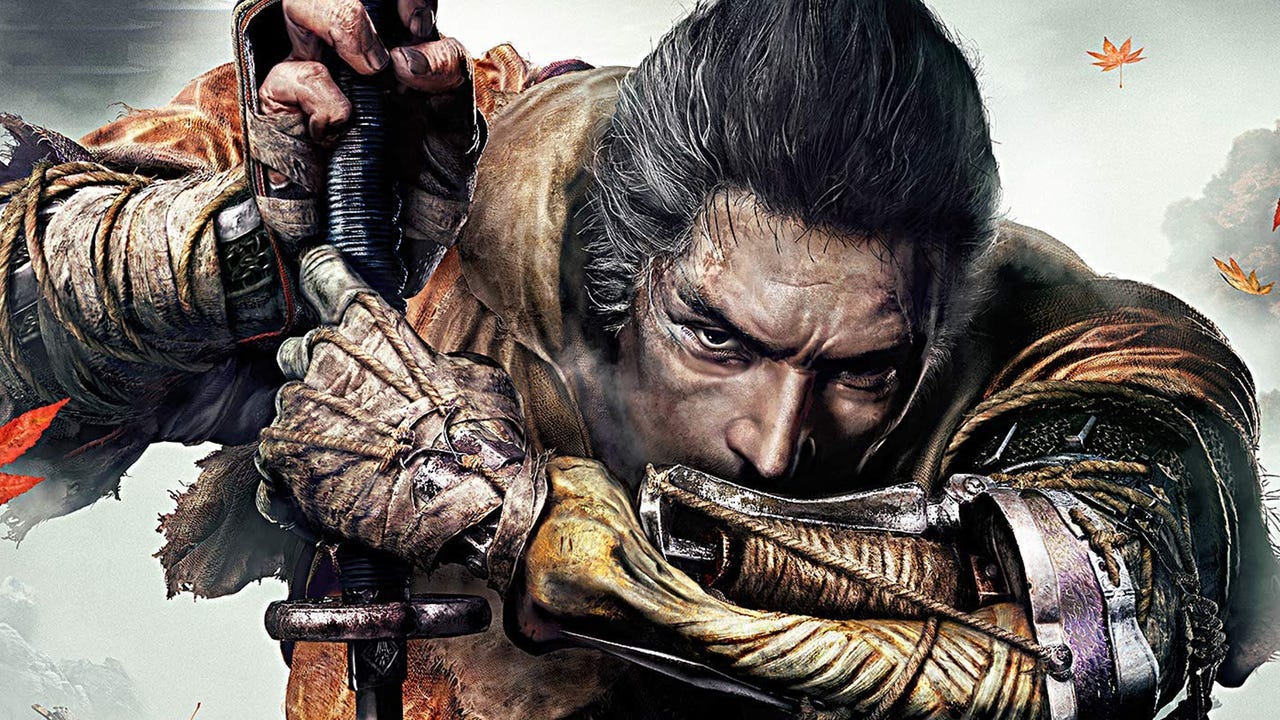
Sekiro Doesn’t Care If You’re “Good Enough”

I died 47 times in the first boss fight. Not in a row — that would’ve been impressive. No, it was scattered across three days, two cups of terrible coffee, and one increasingly suspicious glare from my cat, who’d clearly decided I was either broken or cursed.
And you know what? I didn’t rage-quit. Didn’t unplug the controller. Didn’t even sigh dramatically. I just sat there, watched Wolf slump to his knees for the 47th time, and thought: Okay. What did I miss?
That’s the quiet magic of Sekiro: Shadows Die Twice. It doesn’t hold your hand. But it also doesn’t sneer at you. It just… waits. Patient. Unblinking. Like a swordmaster who’s seen every mistake you’re about to make — and knows you’ll only believe him after you’ve made it yourself.
You’re Not Supposed to Dodge Everything
Let’s get this out of the way: the “deflection” system isn’t a gimmick. It’s the game’s spine, its grammar, its entire vocabulary. You don’t avoid attacks — you answer them. Every clang of steel is a sentence. Every mistimed parry is a stutter. Every perfect rhythm, clink-clink-CLANG, feels less like reflex and more like conversation.
Most action games treat dodging as an escape hatch. In Sekiro, dodging is cowardice — unless it’s exactly what you need. A well-timed sidestep past a spear thrust sets up a deathblow behind the enemy’s guard. A backflip over a sweeping axe creates space to reload a firecracker or toss a shuriken into their eyes. But if you spend too much time dancing around, you’re not playing smart — you’re stalling. And stalling gets you killed by the guy who’s been patiently waiting for you to run out of stamina.
The posture meter isn’t a “second health bar.” It’s tension. It’s the moment your opponent blinks, shifts weight, hesitates — and you feel it before the UI tells you. Break it, and they stagger. Break it again, and they’re wide open. Miss the window? They recover. And now you’re the one breathing hard, low on healing gourds, staring down a katana that’s suddenly very, very interested in your neck.
It’s exhausting. It’s exhilarating. It’s the first Souls-like where I actually wanted to watch enemy animations frame-by-frame — not because I had to, but because I got something out of it. That guard’s left foot lifts half-a-second before his overhead swing? That’s not lore. That’s lunch.
The World Isn’t Just a Backdrop — It’s Your Playground (and Your Trap)
Ashina isn’t built for walking. It’s built for leaping, swinging, dropping, and vanishing.
Remember how, in Dark Souls, you’d finally reach Sen’s Fortress and feel like you’d scaled Everest — only to find another staircase, then a ladder, then a crumbling bridge over a pit full of spikes and despair? Yeah. Sekiro laughs at that.
Here, you latch onto a rope, zip across a chasm, land silently on a rooftop, drop down behind a patrol, slit his throat before he turns — and keep going. No loading screens. No “press X to climb.” Just momentum, physics, and the constant, low hum of what if I jump here?
The Ashina Castle rooftops are pure joy — narrow beams, sloping tiles, lanterns swinging in the wind. You’re not traversing the environment. You’re conducting it. One misstep sends you tumbling into a courtyard full of guards. But hey — maybe that’s the plan. Maybe you want them clustered together so you can blow them all up with a loaded firecracker and vanish before the smoke clears.
And yes, there are still bottomless pits. Yes, there’s a poison swamp that smells like regret and wet socks. Yes, there’s a dungeon so dark you’ll swear your TV screen just turned off — until a torch flares and reveals three enemies already mid-swing. But those places don’t dominate the experience. They punctuate it. They’re the bassline under the melody.
Death Isn’t Failure — It’s Data
“Shadows Die Twice” isn’t marketing fluff. It’s a promise — and a warning.
When you die, you don’t lose everything. You lose half your sen (money) and half your experience. Simple. Brutal. Fair.
But here’s what no tutorial tells you: dying teaches. Not in some vague, “learn from your mistakes” way — in a concrete, tactical sense. Did that ninja vanish and reappear behind you? Now you know to keep moving laterally. Did the general block every single attack until you ran out of stamina? Next time, you switch to the Mikiri Counter — slide under his spear, stab upward, break posture that way. Did the boss feint left, then spin right with a flaming wheel? Well, guess what you’re practicing for the next 20 minutes.
There’s no “corpse run.” No frantic sprinting back through hostile territory. Just a quiet reset. A breath. A choice: resurrect now, or walk back in clean, fresh, and slightly wiser.
I stopped counting resurrections after the first dozen bosses. Not because I didn’t need them — but because I chose not to. Sometimes, dying once told me more than surviving five times ever could.
The Stealth Isn’t “Optional” — It’s Your First Language
You can go loud. You can rush in screaming, deflect like mad, and hope posture breaks before your gourds do. But that’s like trying to write a novel using only exclamation points.
The real elegance — the thing that makes Sekiro feel alive — is how stealth folds into everything else. You don’t “toggle stealth mode.” You become part of the shadows. You hang upside-down from a beam while two guards argue about rice rations. You drop silently onto a ledge, draw your grapple, and yank yourself up as a third guard walks beneath you — timing it so his head bumps your boot. You don’t even need to kill him. Just spook him. Make him turn. Create a gap.
Even boss fights reward observation. That giant armored monk? His helmet has a slit. Shoot an arrow through it — posture damage, no risk. That spear-wielding lord? He always checks his blind spot after his third lunge. Time your grapple to the roof, drop behind him, and — there. One deathblow. Done.
It’s not “cheating.” It’s using the tools. And Sekiro gives you so many tools — prosthetic arms that shoot flame, lightning, poison mist, even a hook that yanks enemies off cliffs — that refusing to use them feels less like honor and more like self-sabotage.
Who Is This For?
Not everyone.
If you want a story you can absorb while grinding levels, skip it. The plot’s there, rich, melancholic, steeped in Japanese folklore, but it’s delivered in whispers, scrolls, and half-overheard conversations. You have to lean in.
If you want to feel powerful fast, look elsewhere. Wolf starts fragile. He stays fragile. His strength isn’t in raw stats — it’s in precision, patience, and the quiet confidence that comes from knowing exactly when to strike.
But if you’ve ever stared at a tough boss, not with frustration, but with fascination — if you’ve ever replayed a section not to “get past it,” but to understand it — then Sekiro is for you.
It’s not kind. It’s not forgiving. But it is honest. It never lies to you about what you need to do. It just asks, politely, relentlessly, whether you’re willing to learn.
I still haven’t beaten the final boss.
But I’m not rushing.
I’m watching.
I’m waiting.
And honestly?
I’m having fun.
References & Further Reading
Loading comments...
Loading similar articles...