
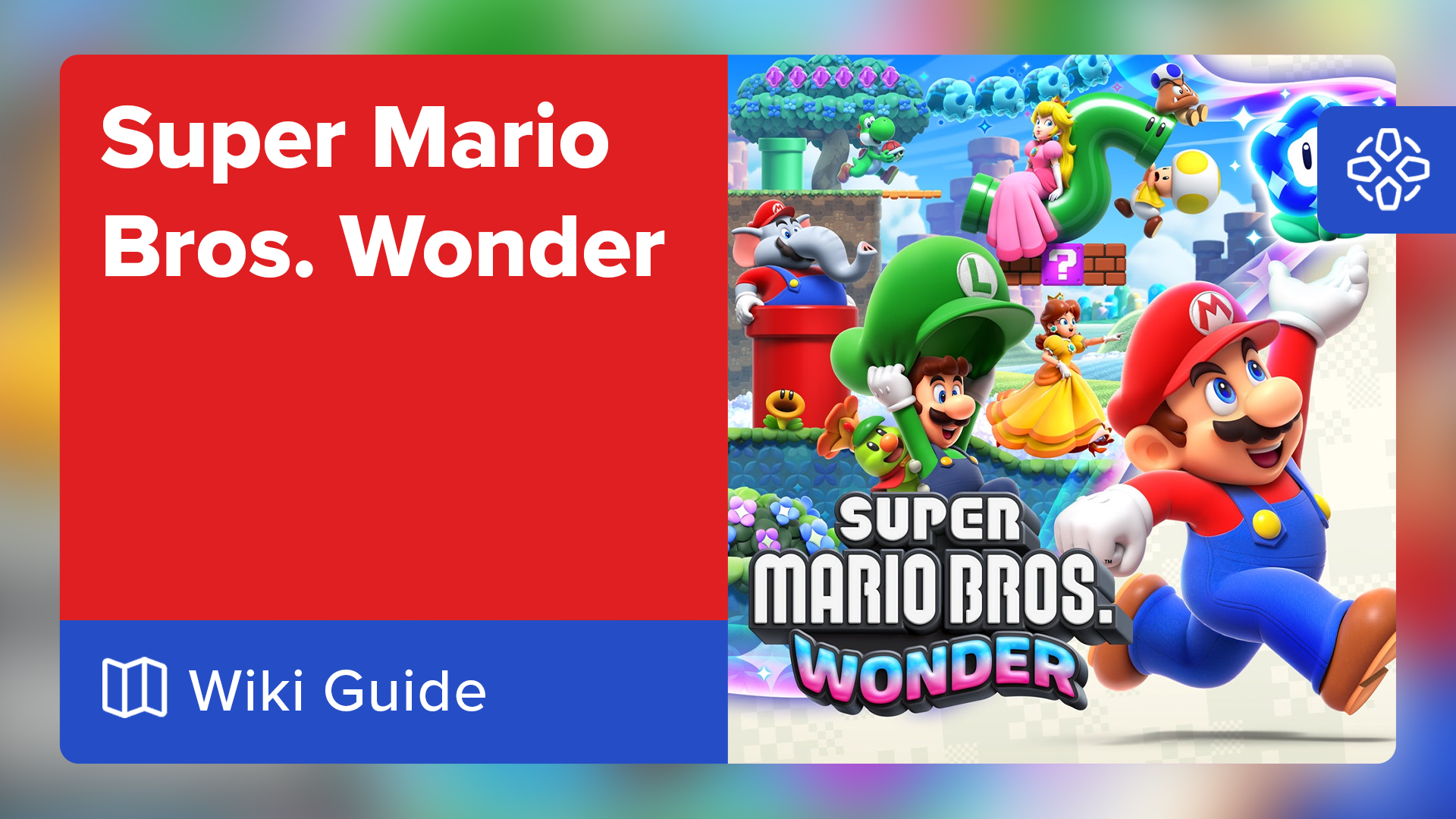
Super Mario Bros. Wonder Isn’t Trying to Be Deep — and That’s Why It’s Brilliant
Super Mario Bros. Wonder Isn’t Trying to Be Deep — and That’s Why It’s Brilliant I played Super Mario Bros. Wonder for 47 minutes before I stopped trying to “review” it and just… laughed. Out loud.
Super Mario Bros. Wonder Isn’t Trying to Be Deep — and That’s Why It’s Brilliant

I played Super Mario Bros. Wonder for 47 minutes before I stopped trying to “review” it and just… laughed. Out loud. In my kitchen. My coffee went cold. My dog looked up, mildly concerned. And honestly? That’s the most accurate review I can give.
It’s not because it’s shallow — far from it. It’s because Wonder doesn’t posture. It doesn’t wink at you like it’s secretly smarter than you. It doesn’t bury its heart under layers of lore or pretend its mechanics are “innovative” in some sterile, academic way. It’s just joy, engineered with Nintendo’s usual absurd precision.
The Wonder Flower isn’t a gimmick — it’s a personality transplant
You know that moment when you’re mid-jump, about to land on a Goomba, and poof — the entire stage flips sideways, gravity tilts, and suddenly you’re running up a wall while piranha plants sprout from the ceiling like daisies? That’s not a set-piece. That’s Tuesday.
The Wonder Flower isn’t some late-game power-up you unlock after solving five logic puzzles. It’s right there, usually near the end of the first world, bright pink, slightly smug-looking, and the second you touch it, the game stops being polite. Platforms invert. Enemies turn into platforms. Pipes vomit out clouds. A giant frog might drop in and start breakdancing on your head.
What’s wild isn’t how often it happens — it’s how casually it happens. No fanfare. No tutorial pop-up saying “CONGRATULATIONS, YOU’VE TRIGGERED A REALITY ANOMALY.” Just boom, and now you’re climbing a ladder made of spaghetti while Luigi sings opera in the background.
And here’s the thing: it never feels cheap. Because the level design bakes in the chaos. You don’t have to “adapt on the fly” — you’re supposed to get disoriented. The camera leans in. The music swells, then stutters, then rewinds two bars. It’s not breaking the rules — it’s rewriting them mid-sentence, and handing you the pen.
Four-player co-op that actually works (yes, really)
Let me be blunt: most 2D Mario co-op feels like herding cats who’ve all had three espressos. You die, someone else grabs your body and tries to drag you back to life like it’s a sack race. Chaos is inevitable. But Wonder makes chaos cohesive.
Why? Because it gives every player agency without demanding perfect timing. Grab a Wonder Seed? Everyone gets a little star shield. Hit a flower coin together? Everyone gets +5. Get hit? You don’t vanish — you shrink into a tiny, squeaky version of yourself that can still jump, grab, and even trigger flowers if you time it right. You’re never out. You’re just… temporarily adorable.
And the screen? It breathes. It zooms, stretches, splits — but never loses anyone. I’ve seen four players scatter across a single screen like confetti, only for the camera to gently nudge them back into frame like a patient parent gathering toddlers before dessert. It’s not magic. It’s just Nintendo finally admitting: “Yeah, we know you’re going to flail. So we built the net under the trampoline.”
Badges aren’t “cosmetic” — they’re cheat codes with charm
You collect badges by doing dumb, delightful things: survive 10 hits as Mini Mario. Beat a level without jumping. Ride a Yoshi through an entire course without letting go. Some are easy. Some require you to hold down R for 90 seconds while humming the Mario theme off-key (okay, maybe not that last one — but it feels like it).
Here’s what’s quietly revolutionary: badges change how the game talks to you. Not just visuals — tone. Get the “No Jumping” badge, and the level intro text reads: “You said no jumps. We heard you. Good luck.” Get the “Mini Mario Master” badge, and the pause menu shows your tiny self shivering dramatically next to a mushroom.
They’re not stat boosts. They’re inside jokes — and they make the world feel like it’s watching you, not judging you. There’s something deeply comforting about a game that celebrates failure so warmly. Miss a platform? The screen shakes, a sad trombone wah-wahs, and a tiny “oops!” pops up — then immediately transforms into a flower that gives you a boost. It’s not forgiving. It’s kind.
The Special World isn’t “hard mode” — it’s the game finally dropping its mask
You unlock Special World after collecting enough Wonder Seeds — and yes, it’s tougher. But calling it “hard mode” undersells it. This is where Wonder stops pretending to be just a Mario game.
Levels here twist logic like taffy. One stage forces you to lose all your power-ups to progress. Another turns every enemy into a temporary ally — but only if you don’t attack them. There’s a level where the music is literally the only way to know which platforms are real (the beat drops = floor appears). It’s surreal. It’s silly. It’s also exquisitely balanced.
No cheap deaths. No “gotcha” spikes. Just pure, confident weirdness — the kind that only comes from a team that’s spent decades learning exactly how much nonsense players will accept if it’s fun first and logical second.
Yet, somehow, it never feels alienating. My niece (age 7) breezed through half of it. My friend (age 38, self-proclaimed “platformer skeptic”) got stuck on one puzzle for 20 minutes… then solved it while laughing so hard she snorted. That’s the Special World’s secret: it’s not gatekeeping. It’s inviting.
Who’s this for? Honestly? Anyone who still remembers what it felt like to press START and just… grin.
Not the people who need lore dumps before Chapter 3.
Not the ones who demand “meaningful choices” in a game where the biggest decision is “red mushroom or green?”
Not the critics who’ll dock points because there’s no photo mode or skill tree.
This is for the kid who once tried to jump over a gap just to see what happened.
For the adult who still taps the D-pad absentmindedly while waiting for coffee.
For the person who’d rather watch a Yoshi burp rainbows than read a 2,000-word analysis of “narrative cohesion.”
Super Mario Bros. Wonder doesn’t ask you to believe in anything deeper than joy, surprise, and the quiet thrill of seeing what happens next. It’s not profound. It’s not trying to be. It’s just warm, generous, and relentlessly, unapologetically alive.
So yeah — I played it for 47 minutes before I stopped reviewing it.
Turns out, that was the point all along.
References & Further Reading
Loading comments...
Loading similar articles...