
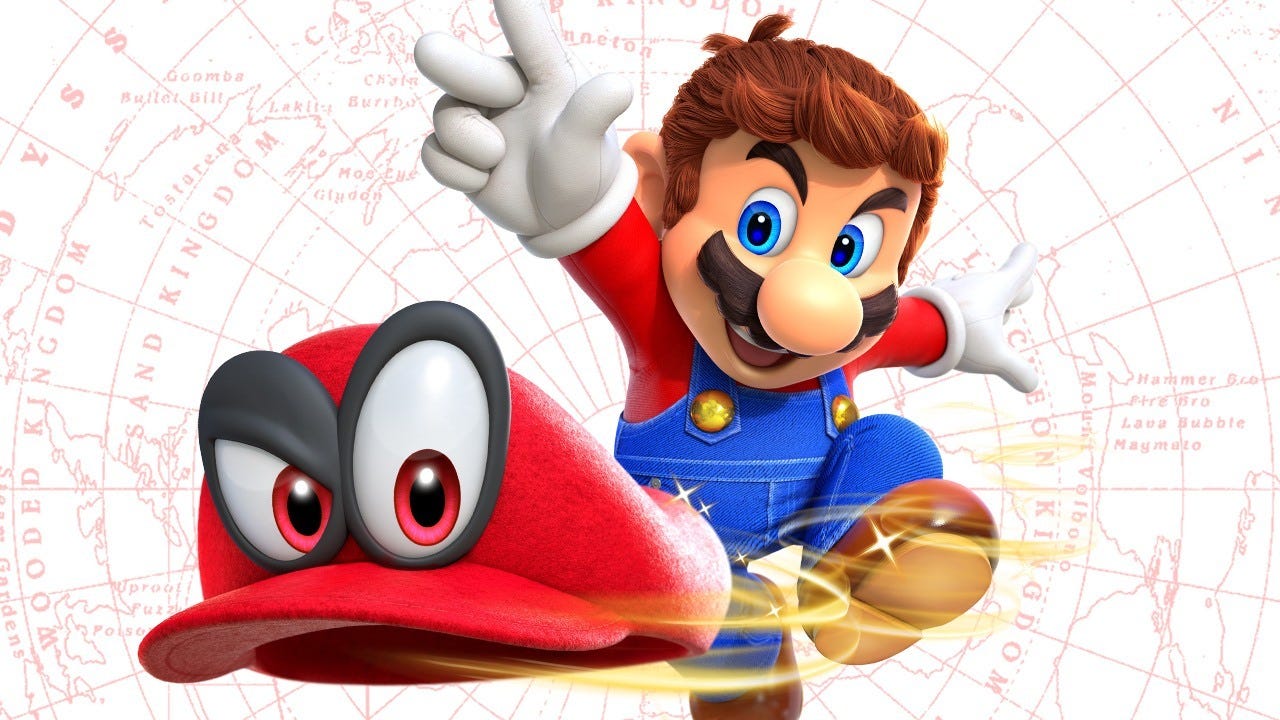
Mario Just Got His Passport Stamped — And It’s Glorious
Mario Just Got His Passport Stamped — And It’s Glorious I cried. Not the quiet, dignified kind — full-on snotty, shoulder-shaking, “why is this plumber making me feel things?” tears.
Mario Just Got His Passport Stamped — And It’s Glorious

I cried. Not the quiet, dignified kind — full-on snotty, shoulder-shaking, “why is this plumber making me feel things?” tears. Right there, in my living room, after Mario and Peach danced on that rooftop in New Donk City while a jazz band played Jump Up, Super Star! like it was the only song left in the world. I hadn’t cried at a video game since I watched my first N64 cartridge load Ocarina of Time’s title screen in 1998. And honestly? That was more awe than emotion. This was pure, uncut joy. Like Nintendo reached into my childhood, shook out the dust, and handed me back something warm and alive — but with better physics.
It’s not just a Mario game. It’s a *vibe*.
Let’s get one thing straight: Super Mario Odyssey doesn’t try to be deep. It doesn’t have lore dumps or moral ambiguity. Bowser kidnaps Peach. Again. Cappy’s sister Tiara? Also kidnapped. Yes, it’s absurd. Yes, it’s recycled. And yes — that’s exactly why it works. Because Odyssey isn’t selling you a story. It’s selling you permission: permission to bounce off a taxi roof in a tuxedo, to possess a literal pile of Goombas like it’s the most natural thing in the universe, to walk into a pipe and suddenly be 8-bit Mario sliding across the curved surface of a soda can.
That possession mechanic, Cappy, the sentient hat, sounds dumb on paper. And it is dumb. Beautifully, hilariously dumb. You throw him like a frisbee, he latches onto a creature (or object — yes, even a traffic cone), and bam, Mario’s body gets vacuumed inside like a cartoon soul swap. One second you’re jumping; the next you’re stomping as a T-Rex through a canyon, tail swinging, ground cracking, camera rattling like you’re inside a drum kit. Or you’re a Cheep Cheep flapping wildly through underwater currents, or a Bullet Bill screaming down a rail line. It’s not just “new moves” — it’s personality. Each possession changes how the world feels, how time moves, how you breathe while playing.
And here’s the kicker: it never overstays its welcome. You’ll spend five minutes as a tank in the Snow Kingdom, then switch to a snowball you can roll up hills and launch like a cannonball — and then, just as you start thinking okay, what’s next?, you’re back to Mario, running up a wall, grabbing a flagpole, and doing a little shimmy because why not?
The 2D pipes are where nostalgia goes to get weird
You know those pixel-perfect pipes scattered across the kingdoms? They’re not just set dressing. Walk into one, and poof — you’re in a fully realized, scrolling 2D level… except it’s wrapped around a 3D object. Like, literally around. Jump off the right edge of a platform in the Sand Kingdom, and you land on the backside of the same platform — now rendered in crisp, chiptune-era sprites. Gravity flips. Perspective warps. You’ll find 8-bit versions of your current outfit, cowboy hat, lab coat, even the damn wedding tux, all animated with loving, anachronistic charm.
I spent ten minutes trying to get Mario to do a perfect pixel-perfect spin jump on a rotating gear in the Wooded Kingdom. Not because it was required. Not because it gave me a Power Moon. Just because it felt good — tight, responsive, like my thumbs remembered exactly how to talk to the NES controller they’d never actually held.
Most of these segments last 30–90 seconds. Which, yeah — sometimes I wanted more. But I also respect that Nintendo didn’t try to rebuild Super Mario Bros. from scratch. They dipped their toe in, winked, and pulled it out before the joke got stale.
Metro Kingdom isn’t just “New York but Mario.” It’s *alive*.
New Donk City is the beating heart of Odyssey, and not just because of the jazz finale (though god, that finale). It’s the first time Mario’s world feels lived-in without leaning on cartoon logic. There are commuters checking phones. Street vendors hawking hot dogs. Graffiti tags that react when you throw Cappy at them. A tiny RC car race tucked behind a dumpster. A jump rope minigame where you have to keep rhythm and avoid tripping over actual pedestrians.
And Mario? He’s tiny here. Not in scale, he’s still the same chunky plumber, but in presence. He stands out like a cartoon character walking into a documentary. That contrast matters. It makes every jump off a lamppost feel like a rebellion. Every coin collected from a street performer feels earned, not just handed to you. Even the music — jazzy, syncopated, with real saxophone breath and bassline swing — refuses to treat Mario like a mascot. It treats him like a guest who somehow belongs.
(Also: the fact that Mario has a jazz band named after him? That’s not world-building. That’s confidence.)
Costume swapping isn’t cosmetic — it’s character
You collect hundreds of outfits. Some are silly (the disco suit). Some are practical (the snow gear lets you walk on icy slopes). Some are just weird (the construction worker hat + snorkel combo). But none of them are filler. Every single one changes Mario’s idle animation, his jump sound, how he reacts when hit — even how Cappy floats above his head. Put on the aviator cap and he’ll salute. Wear the chef outfit and he’ll occasionally stir an invisible pot mid-air.
It’s ridiculous. It’s obsessive. And it turns collecting Power Moons, which could easily feel like a chore, into a scavenger hunt for personality. You don’t just want to finish the game. You want to see what else Mario can be.
Handheld mode? Fine. TV mode? Essential.
Yeah, it runs buttery smooth on the Switch Lite. No dropped frames. No input lag. But play it on a big screen, and Odyssey becomes something else entirely. You notice the way Mario’s eyes squint when he’s climbing a ladder. How his mustache twitches when he’s about to fall. How the background characters in New Donk City blink at different intervals — some slow, some frantic, all alive. You spot the tiny 8-bit icons hidden in brickwork, the graffiti that spells “MARIO” in retro font if you look close enough. These aren’t Easter eggs. They’re whispers — little reminders that someone spent months animating the way a Goomba’s eyebrows move when it’s impressed.
That detail is the difference between a great game and a generous one.
So… who’s this for?
Not just kids. Not just retro fans. Not even just platformer lovers.
It’s for anyone who remembers the first time they jumped and felt that little jolt of control — that sense that yes, I made that happen. It’s for people who miss games that trust you to explore, not chase checklists. For players tired of open worlds that feel like spreadsheets. For anyone who’s ever thought, “What if Mario had a passport? What if he could just… go?”
Odyssey doesn’t fix everything. Some kingdoms feel lighter than others. The post-game content leans hard on repetition (though the Luigi challenges? Still hilarious). And no, you can’t pet the dogs — though you can possess them, and let me tell you, nothing prepares you for the existential weight of being a very confused, very fluffy Pomeranian navigating rush hour traffic.
But here’s what I know for sure:
This is the Mario game I’ve been waiting for since I was eight years old, rewinding Super Mario World on VHS just to watch the ending credits again.
It’s joyful without being childish.
Smart without being smug.
Wild without losing its center.
And when Mario and Peach finally slow-dance under city lights, surrounded by strangers clapping, sax wailing, confetti falling — you don’t just watch it.
You lean in.
You hold your breath.
And for three minutes, you believe in magic again.
Not the kind with wands or spells.
The kind that comes from a plumber, a hat, and the simple, stubborn belief that the world should be funny, bright, and yours to jump into — anytime you want.
References & Further Reading
Loading comments...
Loading similar articles...