
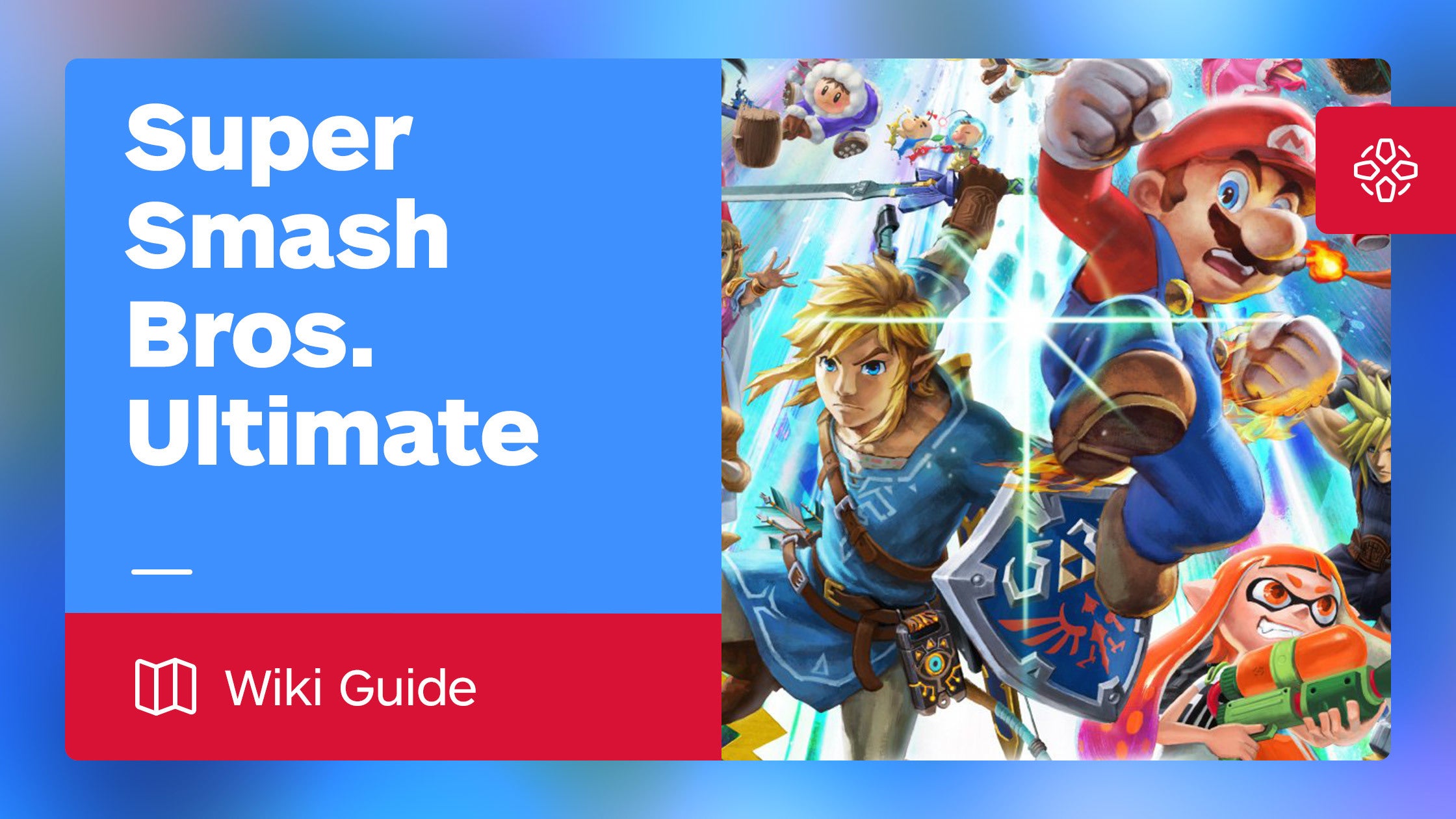
Why I Still Boot Up *Smash Bros. Ultimate* at 1 a.m. (And Why That’s Weird)
Why I Still Boot Up Smash Bros. Ultimate at 1 a.m. (And Why That’s Weird) I was trying to fix my coffee maker last Tuesday. Seriously.
Why I Still Boot Up *Smash Bros. Ultimate* at 1 a.m. (And Why That’s Weird)

I was trying to fix my coffee maker last Tuesday. Seriously. Standing there in socks, squinting at the manual like it held the secrets of quantum physics, when my phone buzzed. It was my friend Marco: “Ridley just ragdolled me off Final Destination. You owe me a rematch.”
I put the manual down. Poured cold brew into a chipped mug. Turned on the Switch.
Ten minutes later, I was losing spectacularly to Bowser Jr. on Battlefield, again, while muttering about shield pressure and wavedashing on carpet.
Yeah. I know. It’s been six years. The game’s old enough to vote. And yet? Smash Bros. Ultimate still feels less like software and more like a slightly chaotic, deeply familiar apartment I keep forgetting I own.
Not a Fighting Game — A Party That Forgot to Invite the Bouncer
Let’s get this out of the way: Ultimate isn’t really a fighting game—not in the way Street Fighter or Tekken are. You don’t win by whittling down a health bar. You win by launching someone so hard they tumble off-screen like a startled pigeon. Damage matters, sure—but only as a stepping stone to ejection. That tiny shift changes everything. It makes spacing feel urgent. It turns platforms into tactical landmines. It means a 2% Fox can still spike you into oblivion if you misjudge your jump.
And that’s why it’s so damn accessible—and so brutally deep. My niece (age 8) can grab a controller, mash A, and send Luigi flying with a well-timed forward smash. My buddy Leo—a guy who once spent three weeks learning how to perfectly cancel Ganondorf’s down-air—can spend an entire evening debating frame data on the exact moment Yoshi’s egg throw becomes punishable. Both are “playing Smash.” Neither is wrong.
The Roster Isn’t Just Big—It’s a Museum With a Sense of Humor
Nintendo didn’t just say “let’s bring everyone back.” They said, “let’s bring everyone back and then quietly add Ridley, who literally murdered the entire cast in Brawl, and make him playable before* the tutorial ends.” That’s not fan service. That’s a wink, a shrug, and a full-on dare.
You start with eight characters, Mario, Kirby, Link, etc. like the N64 days. But unlocking the rest isn’t grindy; it’s weirdly narrative. You fight Mewtwo after surviving a lightning storm in World of Light. You meet Simon Belmont in a gothic hallway that definitely wasn’t in the original Castlevania. You find Ice Climbers tucked behind a waterfall like they’ve been waiting for you to remember them.
And yes—every fighter from every previous game is here. Even ones Nintendo had quietly retired for over a decade. Wolf? Back. Roy? Back. Dr. Mario? Back and now he has a whole separate moveset that’s somehow both dorkier and deadlier than regular Mario. It’s not nostalgia bait. It’s reverence with a smirk.
Spirits: Trophies, But If They Had Opinions and a Slight Attitude Problem
Remember trophies? Those little 3D dioramas you’d collect and rotate in Melee? Ultimate replaced them with Spirits—tiny portraits of characters, enemies, items, or even obscure Nintendo devs (yes, there’s a Spirit of Shigeru Miyamoto holding a NES controller).
Here’s the twist: they’re functional. You slot them onto fighters before matches to boost stats, grant abilities (“Auto-Heal,” “Increased Jump”), or even change how attacks behave. Want Kirby to shoot fireballs like a mini-Mario? Slot in Fire Flower. Want Peach to float longer? There’s a Spirit for that.
But they’re also weird. Some have voice lines (“I am… the Power Star!”), others have bizarre lore blurbs (“This Spirit represents the existential dread of loading screens”). They’re not just power-ups—they’re inside jokes, Easter eggs, and Nintendo’s quiet love letter to its own history. And yeah, they clutter the menu. Yeah, the Spirit Board mode feels like a chore sometimes. But then you unlock the Super Metroid Mother Brain Spirit and suddenly you’re watching her animation loop for two minutes, whispering, “She’s so mad.”
World of Light: An Adventure Mode That’s Equal Parts Gorgeous and Gloriously Unhinged
You wake up alone. Kirby. On a cratered planet. Everyone else is gone—turned into spirits, frozen in glass, floating in the void. You have no moves. No items. Just one fragile pink ball rolling across desolate landscapes while a haunting piano score plays.
Then, five minutes in, you fight a giant, spectral version of Ganondorf on top of a crumbling temple while his theme swells like a villain’s greatest hits album.
World of Light is not a traditional adventure mode. It’s part visual novel, part puzzle box, part boss-rush, and part “wait, why is there a Donkey Kong Country level inside a Star Fox stage?” It’s messy. It’s long. It’s got some genuinely baffling platforming sections where you’ll die because the camera decided to hide the ledge. But it also has moments of pure, wordless awe—like crossing a bridge made of light between two shattered moons, or finally reuniting with Zelda after hours of silence. It’s flawed. It’s sincere. It’s unmistakably Sakurai.
The Real Secret Isn’t the Roster—It’s the Physics
Here’s what nobody talks about enough: Ultimate’s hitbox and knockback system is ludicrously tuned. Every character has a unique weight, traction value, falling speed—even their air acceleration feels distinct. Pikachu drifts. Bowser plummets. Jigglypuff floats like she’s been lightly dusted with fairy dust.
That’s why playing against real people never gets stale. You learn to read how someone moves—their jump arc, their landing lag, whether they tend to roll left or right after shielding. It’s body language translated into code. And when it clicks? When you predict Marth’s tipper and punish it with a perfect edge-guard? That’s not just skill. It’s conversation.
And yeah, the online used to be rough. It’s better now—but still won’t win any awards for stability. Yet we keep coming back. Not because it’s perfect. Because it’s alive. Because it breathes. Because it remembers your bad habits—and laughs while countering them.
So Who’s This For?
Not the completionist who needs every spirit unlocked. Not the esports hopeful grinding frame-perfect combos at 3 a.m. (though they’ll find plenty to love).
It’s for the person who boots it up after a long day, picks Kirby, and spends twenty minutes just floating over Final Destination—no pressure, no stakes, just the soft pfft of his up-special and the gentle hum of the stage music.
It’s for the dad who teaches his kid how to grab the ledge just in time. For the college friends who pause mid-match to argue whether Piranha Plant counts as canon. For the ex who still texts you “Peach just spammed turnips on me” at midnight.
Ultimate isn’t the most technically impressive game on the Switch. It’s not the prettiest. It’s not even the deepest in terms of raw mechanics—Project M fans will tell you that fast.
But it’s the only game I’ve ever owned where “just one more match” reliably becomes “oh god it’s 2:17 a.m. and I need sleep but also what if I try Cloud with the Master Sword costume one more time?”
It’s not perfect.
It’s not supposed to be.
It’s just… ours.
References & Further Reading
Loading comments...
Loading similar articles...